Strength Training Calorie Calculator: Watch vs METs
Your watch is the wrong tool for counting calories burned lifting weights. A 2018 validation study of seven energy-expenditure devices found none met the 10 percent accuracy threshold during resistance exercise, and a smartwatch review reported weak correlations with indirect calorimetry (r = 0.10 to 0.34) for lifting energy. The steadier estimate comes from MET values: strength training sits at roughly 3.5 to 6.0 METs, so a 70 kg lifter burns about 175 kcal (732 kJ) in a moderate hour. How to estimate lifting calories from body weight and effort, why wrist trackers overshoot, and a printable MET table for 2026.

James Nakamura
Sports Nutritionist & Meal Prep Coach
Your wrist tracker is the wrong tool for counting calories burned lifting weights. When researchers compared devices against a metabolic cart, none met the 10 percent accuracy standard for energy expenditure during resistance exercise, and smartwatch estimates correlated only weakly with the lab measurement. A steadier way to estimate is the MET method: strength training sits at roughly 3.5 to 6.0 METs, so a 70 kg lifter burns about 175 kcal, or 732 kJ, in a moderate hour.
If you lift weights and glance at your watch afterwards, the calorie number it shows is probably the least trustworthy figure your device produces all day. Wrist trackers were built around steady, rhythmic cardio, where heart rate tracks effort closely. Lifting breaks that assumption: it is stop-start, it spikes your heart rate from muscle strain and breath-holding rather than sustained aerobic demand, and much of its energy cost is anaerobic and shows up after you rack the bar. The result is a number that can be off by tens of percent in either direction.
This guide separates the estimate you can lean on from the one you cannot. It walks through what the strongest validation studies found when they put wearables next to indirect calorimetry, why lifting is uniquely hard to measure, and how to produce a sensible calorie figure from your body weight and effort instead. It completes the exercise-calculator set alongside the MET calorie calculator, the running calculator, and the cycling calculator. Every figure is grounded in a primary source listed at the end.
How many calories does strength training actually burn?
A moderate resistance session burns roughly 3.5 to 6.0 METs, which for a 70 kg (154 lb) adult works out to about 120 to 210 kcal per hour, or 515 to 880 kJ. A single circuit or full-body session in the research literature ranged from around 6 to over 60 kJ per minute, so real sessions vary widely with load, rest, and how much muscle each lift recruits.
The honest starting point is that lifting burns less during the session than most people expect, and more afterwards than their watch credits. A 2024 systematic scoping review of 166 studies measuring the energy cost of resistance exercise found single-exercise bouts ranged from 6 to 1,575 kJ and multi-exercise sessions from 38 to 2,957 kJ, with per-minute rates spanning 6 to 62 kJ. That enormous range is the point: a heavy powerlifting session with five-minute rests spends far fewer calories per minute than a brisk full-body circuit with 60-second rests, even though the powerlifting session feels harder.
The MET method smooths this into a usable estimate. One MET is standardised as 3.5 mL of oxygen per kilogram of body weight per minute, or about 1 kcal per kilogram of body weight per hour. Multiply the activity's MET value by your weight in kilograms to get calories per hour. Only four of the 166 studies in the scoping review used METs directly, and they assigned resistance training values of 3.5 to 6.0 depending on effort, matching the classic Compendium codes for weight training.
Here is the MET method applied across common body weights and three effort levels — light machine or bodyweight work, a moderate multi-exercise session, and vigorous circuit or heavy free-weight training. Figures are calories per hour, with kilojoules alongside.
| Body weight | Light (3.5 MET) | Moderate (5.0 MET) | Vigorous (6.0 MET) |
|---|---|---|---|
| 60 kg / 132 lb | 105 kcal (439 kJ) | 150 kcal (628 kJ) | 180 kcal (753 kJ) |
| 70 kg / 154 lb | 123 kcal (515 kJ) | 175 kcal (732 kJ) | 210 kcal (879 kJ) |
| 80 kg / 176 lb | 140 kcal (586 kJ) | 200 kcal (837 kJ) | 240 kcal (1,004 kJ) |
| 90 kg / 198 lb | 158 kcal (661 kJ) | 225 kcal (941 kJ) | 270 kcal (1,130 kJ) |
| 100 kg / 220 lb | 175 kcal (732 kJ) | 250 kcal (1,046 kJ) | 300 kcal (1,255 kJ) |
Does your watch overestimate calories burned lifting?
Yes — and the research is unusually consistent about it. A 2018 study that tested seven energy-expenditure devices during cycling and resistance exercise concluded that no device was valid for energy expenditure in either mode, failing the 10 percent error threshold. A separate smartwatch review found lifting-energy estimates correlated only weakly with lab measurement (r = 0.10 to 0.34) with poor reliability.
The core problem is that wrist trackers infer calories from heart rate and motion, and both signals mislead during lifting. Heart rate climbs during a hard set, but that climb reflects pressure from straining and breath-holding as much as aerobic demand, so the device reads high effort while actual oxygen consumption — the thing that burns calories — is lower than the heart rate implies. Motion sensing fares no better: a slow, heavy deadlift barely moves your wrist, yet costs real energy, while a light, fast movement can register as vigorous.
The numbers back this up. In the 2018 validation of eight heart-rate monitors and seven energy-expenditure devices across 50 participants, researchers found that while some chest straps tracked heart rate well, "no device was valid for EE during cycling or resistance exercise." A smartwatch-specific study comparing Apple, Galaxy, Fitbit, and Garmin devices reached the same split verdict: heart rate matched an ECG closely (r = 0.64 to 0.97), but energy-expenditure estimates during resistance work showed weak correlations with indirect calorimetry (r = 0.10 to 0.34) and poor reliability (intraclass correlation below 0.45).
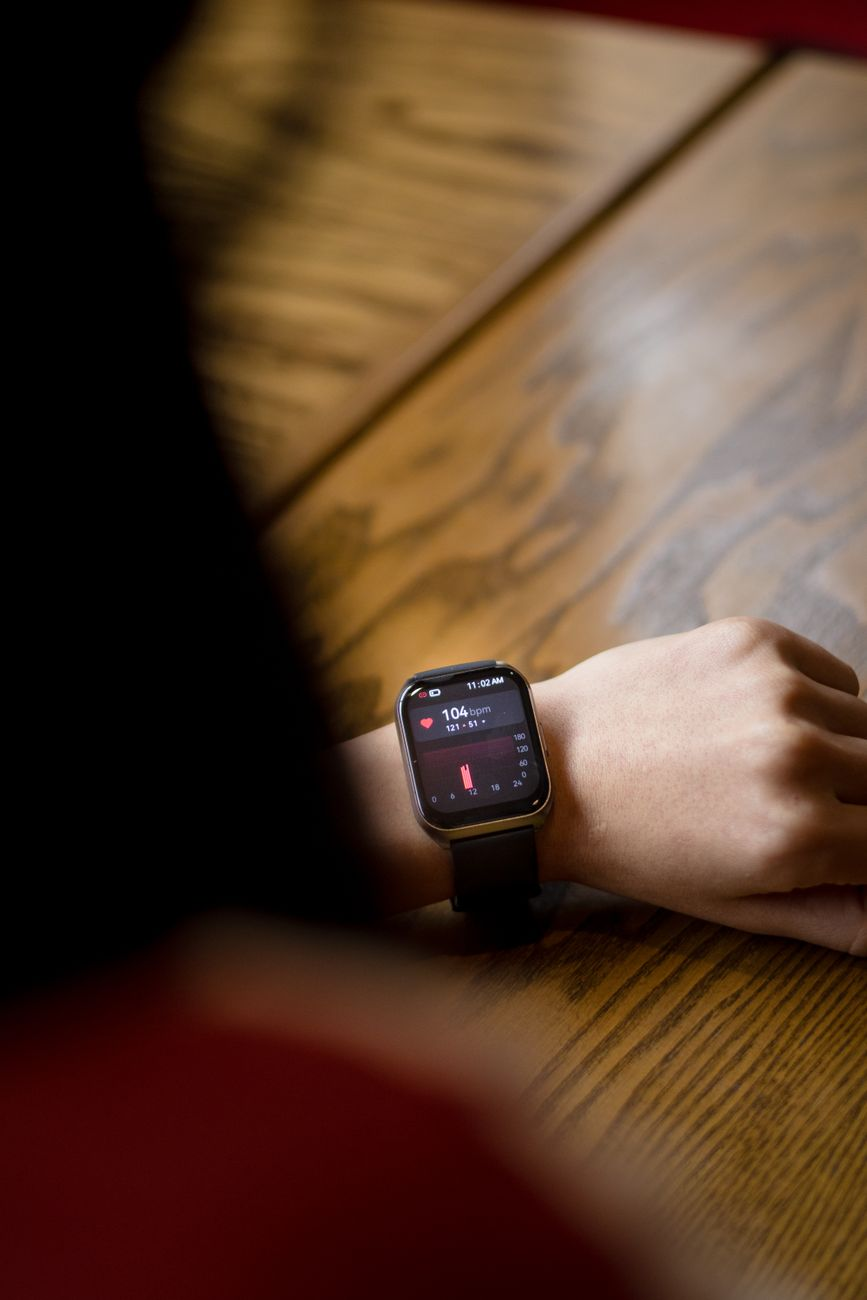
The broader wearable literature adds context. A 2017 Stanford study of seven wrist devices in 60 adults found that although six measured heart rate within 5 percent during cycling, "no device achieved an error in EE below 20 percent" across activities — the researchers advised caution using wearable calorie figures in any health programme. The scoping review put wearable error during resistance work even wider, at mean absolute percentage errors of 15 to 57 percent. This table summarises what the strongest studies reported.
| Study (year) | Devices and sample | What it found for lifting energy |
|---|---|---|
| Wearable validity, cycling & resistance (2018) | 7 EE devices, 50 adults | No device valid; all exceeded 10% error |
| Smartwatch HR vs EE (resistance) | Apple, Galaxy, Fitbit, Garmin | EE correlated weakly (r = 0.10–0.34), poor reliability |
| Stanford wrist devices (2017) | 7 devices, 60 adults | No device below 20% EE error across activities |
| Resistance EE scoping review (2024) | 166 studies | Wearable error 15–57%; only 4 studies used METs |
How do you estimate lifting calories without a watch?
Anchor the estimate on your body weight and the session's effort using the MET method, then adjust for rest and how compound the lifts are. For a rough default, take your body weight in kilograms, multiply by 5 for a typical moderate session, and multiply by the fraction of an hour you trained. A 70 kg lifter training 45 minutes at moderate effort burns about 130 kcal (545 kJ).
The MET method gives you a stable number that does not swing with a noisy heart-rate reading. Here is a practical way to produce a defensible figure and use it well:
- Pick your MET band by effort, not by how hard it felt. Long rests and heavy singles lean light (3.5). A full-body session with 60-to-90-second rests lands moderate (5.0). Short-rest circuits and supersets lean vigorous (6.0).
- Multiply MET by your body weight in kilograms to get calories per hour, then scale to your actual training time — a 40-minute session is 0.67 of that hourly figure.
- Do not count rest as full training time if you take long breaks. If half your hour was sitting between heavy sets, your average intensity — and your burn — is closer to the light band.
- Add a small afterburn, but keep it modest. Resistance training raises post-exercise energy expenditure, and the scoping review found nearly half of studies measured it, but for most sessions it adds tens of calories, not hundreds.
- Log it once and stop re-checking your watch. A single MET-based estimate beats a wrist number that the research shows can miss by 15 to 57 percent.
For tracking that supports fat loss, the session-burn figure matters far less than most people think. Your total daily energy expenditure already folds in the general activity level you set, and if your calorie target was built from an activity multiplier, adding your watch's lifting burn on top risks double-counting the same exercise. The reliable lever is the weekly energy balance you hold, read against your food log — the same logic behind choosing between cardio and strength for fat loss.
Where strength training earns its place is not the calories it burns during the hour — those are modest — but the lean mass it builds, which supports body recomposition and props up your resting metabolic rate over months. Judged by that longer horizon, a session that burns "only" 175 kcal is still one of the highest-value hours in your week.
Frequently Asked Questions
Does lifting weights burn a lot of calories?
Less than most people expect during the session, but the value is longer-term. A moderate hour of resistance training runs about 3.5 to 6.0 METs, so a 70 kg adult burns roughly 120 to 210 kcal (515 to 880 kJ) in an hour. Research on 166 studies found single sessions ranged widely, from 6 to over 2,900 kJ. The muscle you build, not the calories you burn in the hour, is the main payoff.
Why does my watch overestimate calories when I lift?
Wrist trackers infer calories from heart rate and motion, and both mislead during lifting. Your heart rate spikes from straining and breath-holding rather than aerobic demand, so the device reads high effort while true oxygen use is lower. A 2018 validation study found no device met the 10 percent accuracy standard for energy expenditure during resistance exercise.
How accurate are fitness trackers for weightlifting calories?
Poor, according to the strongest studies. Smartwatch energy estimates during resistance work correlate only weakly with lab measurement (r = 0.10 to 0.34) with low reliability, and a 2024 review put wearable error at 15 to 57 percent. Heart rate itself is measured well; it is the leap from heart rate to calories that breaks down during intermittent, anaerobic lifting.
What is a MET and how do I use it for lifting?
One MET is your resting metabolic rate, standardised as 3.5 mL of oxygen per kilogram per minute, or about 1 kcal per kilogram of body weight per hour. To estimate lifting calories, multiply the activity's MET value — 3.5 for light, 5.0 for moderate, 6.0 for vigorous strength work — by your body weight in kilograms, then by the fraction of an hour you trained.
Should I eat back the calories my watch says I burned lifting?
Consider caution. If your daily calorie target already assumed an active lifestyle, eating back a watch-reported lifting burn can count the same training twice, and the reported number may be inflated by 15 to 57 percent. A safer default is to leave most tracked exercise calories un-eaten and let your weekly weight trend guide adjustments.
Sources
- Ogata H, et al. Methods to Assess Energy Expenditure of Resistance Exercise: A Systematic Scoping Review. Sports Med. 2024. https://pmc.ncbi.nlm.nih.gov/articles/PMC11393209/
- Boudreaux BD, et al. Validity of Wearable Activity Monitors during Cycling and Resistance Exercise. Med Sci Sports Exerc. 2018. https://pubmed.ncbi.nlm.nih.gov/29189666/
- Comparative Validity of Smartwatch-Derived Heart Rate and Energy Expenditure During Endurance and Resistance Exercise. 2025. https://pubmed.ncbi.nlm.nih.gov/42076635/
- Shcherbina A, et al. Accuracy in Wrist-Worn, Sensor-Based Measurements of Heart Rate and Energy Expenditure in a Diverse Cohort. J Pers Med. 2017. https://pubmed.ncbi.nlm.nih.gov/28538708/
- Are wearable heart rate measurements accurate to estimate aerobic energy cost during low-intensity resistance exercise? PLoS One. 2019. https://pubmed.ncbi.nlm.nih.gov/31437191/
- Herrmann SD, et al. 2024 Adult Compendium of Physical Activities: A third update of the energy costs of human activities. J Sport Health Sci. 2024. https://pubmed.ncbi.nlm.nih.gov/38242596/
Ready to track smarter?
Join thousands who use kcalm for calorie tracking. AI-powered food recognition, scientifically-validated calculations, and zero anxiety.
Related Articles
Standing Desk Calories: The Real Number Is 9 Per Hour
Standing at your desk burns about 9 extra kcal (38 kJ) per hour compared with sitting — 0.15 kcal per minute for a 65 kg adult, per a meta-analysis of 46 studies and 1,184 participants — roughly one-sixth of the 30-to-50 kcal figure desk vendors advertise. Replacing six hours of sitting with standing adds about 54 kcal a day, while one easy 30-minute lunchtime walk adds roughly the same as standing all afternoon. Where the vendor number goes wrong, the measured MET table for desk tasks, why standing occupations really do double occupational burn, and how to handle standing time in your calorie log.
ScienceHow Many Calories Does an Ice Bath Burn? The Real Math
A typical 10-to-15-minute ice bath burns roughly 20 to 80 extra kcal (85 to 335 kJ) — less than a single banana, and an order of magnitude below the 250 to 500 kcal that plunge marketing claims. The measured literature is consistent: an 18 degree cooling suit raised energy expenditure by 250 kcal across three full hours, the 88-minute world-record ice immersion roughly doubled heat production from 169 to 321 watts, and a meta-analysis of 10 randomised trials put mild cold exposure at 188 extra kcal per day. Even six weeks of two-hours-daily cold acclimation lifted cold-induced thermogenesis to only 289 kcal a day. Real physiology, trivial energy cost — the protocol-by-protocol table, the shivering math behind the vendor claims, and how to log a plunge honestly.
ScienceCan You Only Absorb 30g of Protein Per Meal? The Data
The claim that your body can only absorb 30 g of protein per meal fails on both halves. Your gut absorbs virtually all the protein you eat — the real question is how much your muscle uses — and the best-measured feeding study to date answered it: 100 g of milk protein kept muscle protein synthesis elevated for more than 12 hours, beating a 25 g dose by roughly 40 percent in the 4-to-12-hour window, with almost none of the extra oxidised away. Where the 30 g figure came from, what the dose-response trials from 20 g to 100 g actually show, the per-meal targets by body weight, and what it all means for how you log protein.