Hydration and Weight Loss: How Much Water Should You Really Drink?
Does drinking water help weight loss? Learn the real evidence on hydration, the 8-glass myth, how water curbs hunger, daily targets by body weight, and practical tracking tips.
kcalm editorial team
Prepared with AI assistance
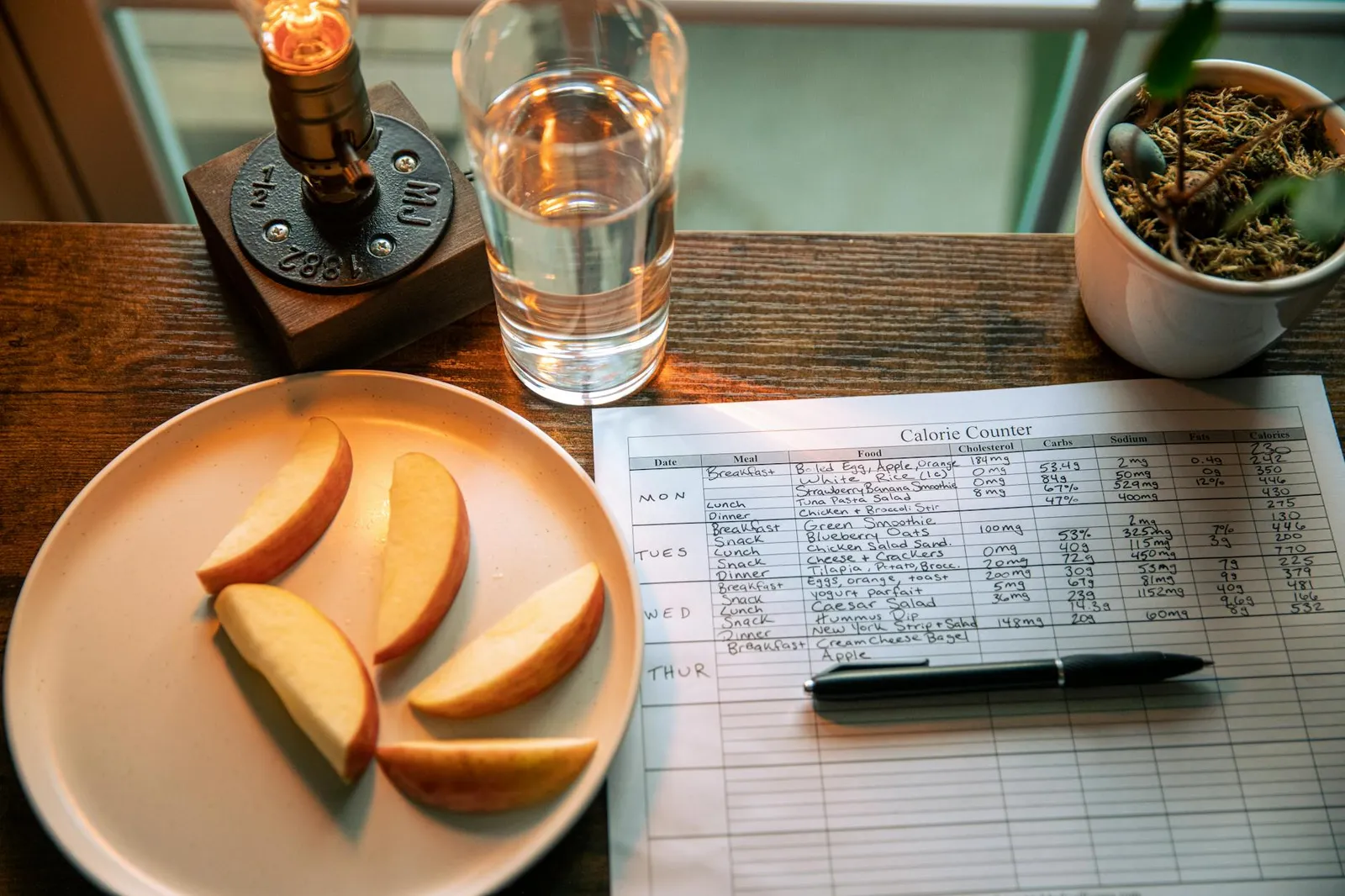
Drinking water supports weight loss but is not a fat-burning shortcut. Adequate hydration helps in three concrete ways: it suppresses appetite when consumed before meals, it modestly raises resting energy expenditure, and it prevents the thirst signals people often mistake for hunger. A 2010 Obesity trial found adults who drank 500 ml of water before meals lost 44% more weight over 12 weeks than those who did not.
The "8 glasses a day" rule is folklore, not science. The Institute of Medicine's actual guidance is roughly 3.7 liters per day for men and 2.7 liters for women from all sources — food, beverages, and plain water combined. About 20% comes from food, so the plain-water target is closer to 2.0-3.0 liters depending on body size, activity, and climate.
This guide covers what the research actually shows about water and weight, how to calculate your own target, when electrolytes matter, and how to track hydration alongside calories without it becoming another chore.
Does Drinking Water Actually Help You Lose Weight?
Yes, but the effect is modest and works through specific mechanisms — not magic. Water aids weight loss by reducing meal-time calorie intake, raising thermogenesis briefly, and replacing higher-calorie drinks. The biggest single-study finding: a 2010 Obesity RCT by Dennis et al. showed pre-meal water drinkers ate 75-90 fewer calories per meal and lost an extra 2 kg over 12 weeks compared to controls.
The mechanism is mechanical rather than metabolic. Stretch receptors in the stomach signal fullness regardless of caloric content, so 500 ml of water before a meal lowers subsequent intake. Water-induced thermogenesis — the small calorie burn from warming ingested water to body temperature — adds only 20-30 kcal per liter, according to a 2003 Journal of Clinical Endocrinology & Metabolism study by Boschmann et al. That is real but trivial compared to the 75-90 kcal saved by eating less.
How Much Weight Can Water Realistically Help You Lose?
In controlled trials, adding 1.5-2.0 liters of water per day to a calorie-controlled diet produces an extra 1.5-2.5 kg of weight loss over 12 weeks. A 2013 Journal of Human Nutrition and Dietetics analysis of nine studies estimated that pre-meal water adds about 0.4 kg per month on top of dietary changes. This is meaningful but not transformative — water is an amplifier, not the primary lever.
Does Cold Water Burn More Calories Than Room-Temperature Water?
Slightly, but the difference is too small to matter. Warming a 500 ml glass of ice water to body temperature consumes about 17 kcal versus 7 kcal for room-temperature water. Drinking five glasses of ice water daily nets only 50 extra calories burned — roughly the energy in two carrot sticks. Pick the temperature you will actually drink.
How Much Water Do You Really Need Each Day?
The Institute of Medicine sets adequate intake at 3.7 L/day for men and 2.7 L/day for women, including water from food. Most people need 2.0-3.0 liters of plain water and beverages, depending on body weight, activity, and climate. The simplest evidence-based rule: aim for 30-35 ml per kg of body weight per day, then add 350-700 ml for every hour of moderate exercise.
Body-weight-based targets work better than the "8 glasses" myth because hydration needs scale with size. A 60 kg woman needs roughly 1.8-2.1 L plain water; a 90 kg man needs 2.7-3.2 L. Climate adjusts the target — hot or humid environments can double sweat losses, and altitude above 2,500 m increases respiratory water loss by 250-500 ml/day.
| Body weight | Baseline plain-water target | Add for 1 hour exercise | Hot/humid climate |
|---|---|---|---|
| 50 kg | 1.5-1.8 L | +500 ml | +500-1,000 ml |
| 70 kg | 2.1-2.5 L | +500-700 ml | +500-1,000 ml |
| 90 kg | 2.7-3.2 L | +700-1,000 ml | +750-1,500 ml |
| 110 kg | 3.3-3.9 L | +1,000 ml | +1,000-2,000 ml |
Where Does the "8 Glasses a Day" Rule Come From?
The rule traces to a 1945 US National Research Council recommendation that adults need 2.5 liters of water — but the same document noted that "most of this quantity is contained in prepared foods." That caveat was lost over decades of repetition. A 2002 American Journal of Physiology review by Heinz Valtin found no scientific basis for "8 x 8 oz" as a universal target. The number is memorable, not measured.
Do Coffee, Tea, and Other Drinks Count?
Yes, despite the myth that caffeine dehydrates you. A 2014 PLoS ONE trial by Killer et al. found four cups of coffee per day produced fluid balance equivalent to the same volume of water in habitual coffee drinkers. Tea, milk, soup, and even most sodas contribute to hydration. Alcohol is the exception — it is a net diuretic and reduces total body water. For more on alcohol's metabolic effects, see our alcohol and calorie tracking guide.
What Happens When You Are Dehydrated?
Even mild dehydration — losing just 1-2% of body water — impairs cognition, mood, and exercise performance. A 2012 Journal of Nutrition study by Armstrong et al. found that 1.36% dehydration in young women caused fatigue, headaches, and reduced concentration during routine tasks. By 3-4% loss, endurance drops 20-30% and core temperature rises faster during exercise.
Chronic mild dehydration is common. A 2013 American Journal of Public Health analysis estimated 75% of US adults regularly fall below adequate intake. The typical signs — dark yellow urine, dry mouth, headache by mid-afternoon, low energy — are easy to miss because they overlap with normal fatigue. Urine color is the most practical at-home indicator.
| Hydration level | Urine color | Body water deficit | Effects |
|---|---|---|---|
| Optimal | Pale straw / light yellow | 0% | Normal performance |
| Mild dehydration | Yellow | 1-2% | Fatigue, headache, mild cognitive decline |
| Moderate | Dark yellow | 3-4% | Reduced endurance, irritability, dry mouth |
| Severe | Amber to brown | 5-7% | Dizziness, rapid heart rate, requires intervention |
How Do You Tell Hunger from Thirst?
The two signals share neural pathways and are easy to confuse. A 2015 Physiology & Behavior study by McKiernan et al. found participants correctly distinguished hunger from thirst only 38% of the time when both signals were present. Practical test: when you feel a snack craving between meals, drink 250-350 ml of water and wait 15 minutes. If the urge fades, it was thirst. This single habit can cut 100-300 unnecessary calories per day.
When Do Electrolytes Actually Matter?
For sedentary adults eating a normal diet, plain water is enough — sodium, potassium, and magnesium come from food. Electrolytes become important during prolonged exercise (over 60 minutes), heavy sweating, hot climates, illness with vomiting or diarrhea, and on low-carb or fasting protocols. A 2019 Sports Medicine meta-analysis by McCubbin et al. found endurance athletes who replaced both fluid and sodium during exercise lasting 3+ hours performed 2-6% better than water-only drinkers.
Sodium is the electrolyte most often deficient during heavy sweating because it is lost in the highest concentrations — about 1 g per liter of sweat. The American College of Sports Medicine recommends 0.5-0.7 g sodium per liter of fluid for exercise over 1 hour. Sports drinks, electrolyte tablets, or a pinch of salt in water all work. For most everyday hydration, food-derived sodium covers needs.
Can You Drink Too Much Water?
Yes. Hyponatremia — dangerously diluted blood sodium — occurs when fluid intake outpaces kidney excretion (roughly 800-1,000 ml/hour). Cases are rare but most often happen in marathon runners and people forcing fluids without sodium replacement. The safer ceiling for most adults is no more than 1 liter per hour for sustained periods. The body cannot "store" excess water, so steady intake throughout the day beats large boluses.
How Do You Track Hydration Alongside Calories?
Hydration tracking should be low-friction or it will not stick. The four most reliable systems: a marked water bottle, an app that auto-counts based on bottle size, urine color checks twice daily, and pairing water with existing routines (every meal, every coffee, every workout). kcalm tracks fluid alongside food when you log a glass of water — adding it to your daily log so the same dashboard shows calories, macros, and hydration.
- Use a marked bottle. A 1-liter bottle with hour marks turns the abstract goal into a visual cue. Refill twice daily.
- Anchor water to existing habits. One glass on waking, one before each meal, one with coffee, one after each workout. Five anchors equals 1.0-1.5 L without tracking.
- Check urine color twice a day. Mid-morning and late afternoon. Pale yellow means you are on track.
- Pre-load before meals. 500 ml about 30 minutes before eating reduces intake by 75-90 kcal per meal.
- Log fluid in your tracker. Most apps including kcalm accept water entries; logging makes the habit visible.
- Adjust for exercise and climate. Add 500-700 ml per hour of training, more in heat or at altitude.
- Front-load the day. Most people under-drink in the morning and overcompensate at night, hurting sleep.
For more on building tracking habits without burnout, see our building sustainable tracking habits and psychology of calorie counting guides.
Frequently Asked Questions
Does drinking water before meals really help you eat less?
Yes. A 2010 Obesity trial showed 500 ml of water 30 minutes before meals reduced intake by 75-90 kcal per meal in adults over 55. Effects are smaller but still measurable in younger adults. Stretch receptors in the stomach signal fullness regardless of caloric content. Across two or three meals daily, this can save 150-270 kcal — enough to add 0.4-0.5 kg of fat loss per month at a steady deficit.
Will drinking more water boost my metabolism?
Slightly. Drinking 500 ml of water raises resting energy expenditure by about 24 kcal for an hour, mostly from warming the water and minor sympathetic nervous system activation. A 2003 JCEM study put the daily upside at 50-100 kcal for someone drinking 2 liters. Real but small — water is a metabolism nudge, not a furnace.
Is it better to drink water all at once or throughout the day?
Throughout the day. Kidneys can only process about 800-1,000 ml of fluid per hour, so large boluses get excreted rather than absorbed. Steady sipping keeps blood sodium stable and provides continuous appetite regulation. The exception is pre-meal pre-loading, where 500 ml in one sitting is the active intervention.
Does drinking water flush out fat or toxins?
No. Fat is metabolized through cellular respiration — broken down into carbon dioxide and water, exhaled and excreted. Adequate hydration supports kidney and liver function so they can do their normal filtration work, but water itself does not "flush" fat. The toxin-flushing claim is marketing language without physiological basis.
How can I tell if I am actually dehydrated?
Check urine color in the morning. Pale straw to light yellow means you are well-hydrated; dark yellow or amber indicates a deficit. Other reliable signs include thirst, dry mouth, fatigue starting in the early afternoon, and headaches. A 1.5 kg drop on the scale from morning to evening on a hot day is also dehydration, not fat loss.
Are sports drinks better than water for hydration?
Only for exercise over 60 minutes, hot-climate workouts, or illness with fluid loss. Sports drinks add sodium and 6-8% carbohydrate, which speeds gastric emptying and replaces what is lost in sweat. For sedentary adults or short workouts, the added 50-150 kcal per bottle is unnecessary and works against a calorie deficit.
Can hydration affect calorie tracking accuracy?
Indirectly. Body weight fluctuates 0.5-2.5 kg daily based on hydration, which can mislead daily scale readings. Many "plateaus" are actually water-weight shifts after high-sodium meals or carb refeeds. Track weight at the same time each day under similar hydration conditions, and use 7-day averages. For more, see our guide on metabolic adaptation.
Does coffee count toward my daily water intake?
Yes. A 2014 PLoS ONE study found 4 cups of coffee a day produced fluid balance equivalent to the same volume of water in habitual drinkers. Caffeine has a mild diuretic effect that disappears with regular consumption. Tea, milk, broth, and most non-alcoholic drinks all count. Alcohol is the exception — it is a net diuretic.
Sources
- Dennis, E.A., Dengo, A.L., Comber, D.L., et al. (2010). Water consumption increases weight loss during a hypocaloric diet intervention in middle-aged and older adults. Obesity, 18(2), 300-307.
- Boschmann, M., Steiniger, J., Hille, U., et al. (2003). Water-induced thermogenesis. Journal of Clinical Endocrinology & Metabolism, 88(12), 6015-6019.
- Institute of Medicine (2005). Dietary Reference Intakes for Water, Potassium, Sodium, Chloride, and Sulfate. National Academies Press.
- Valtin, H. (2002). "Drink at least eight glasses of water a day." Really? Is there scientific evidence for "8 x 8"? American Journal of Physiology, 283(5), R993-R1004.
- Killer, S.C., Blannin, A.K., Jeukendrup, A.E. (2014). No evidence of dehydration with moderate daily coffee intake. PLoS ONE, 9(1), e84154.
- Armstrong, L.E., Ganio, M.S., Casa, D.J., et al. (2012). Mild dehydration affects mood in healthy young women. Journal of Nutrition, 142(2), 382-388.
- McKiernan, F., Hollis, J.H., McCabe, G.P., Mattes, R.D. (2008). Thirst-drinking, hunger-eating; tight coupling? Journal of the American Dietetic Association, 109(3), 486-490.
- McCubbin, A.J., Cox, G.R., Costa, R.J.S. (2019). Fluid balance, plasma sodium, and exercise performance in endurance athletes. Sports Medicine, 49(11), 1647-1666.
- Muckelbauer, R., Sarganas, G., Grüneis, A., Müller-Nordhorn, J. (2013). Association between water consumption and body weight outcomes: a systematic review. American Journal of Clinical Nutrition, 98(2), 282-299.
- Stookey, J.D., Constant, F., Popkin, B.M., Gardner, C.D. (2008). Drinking water is associated with weight loss in overweight dieting women. Obesity, 16(11), 2481-2488.
Ready to track smarter?
Join thousands who use kcalm for calorie tracking. AI-powered food recognition, scientifically-validated calculations, and zero anxiety.
Related Articles
Food Scale vs Measuring Cups: Portion Errors Explained
Compare food scales, measuring cups and eyeballing using portion-size research, practical logging steps and worked calorie examples in kcal and kilojoules.
ScienceRowing Calorie Calculator: Watts, Weight and Monitor Math
Estimate rowing calories from watts, pace, body weight and time. Compare Concept2 monitor maths with research and MET values, in kcal and kilojoules.
ScienceSugar Alcohol Calories: What Zero Sugar Costs in Your Log
Zero sugar does not mean zero calories. Sugar alcohols carry anywhere from 0 to 3 kcal (0 to 12.6 kJ) per gram, and the label value depends on where the product was made: the US assigns maltitol 2.1 kcal/g while the EU counts it at 2.4, mannitol swings from 1.6 to 2.4 across the same border, and only erythritol earns a genuine zero in both markets. Australia added allulose to its energy tables in August 2024 at 2 kJ per gram — a fifth of sugar. The full per-gram table in kcal and kJ, why the same protein bar can legally show different calories in three markets, how tracker databases inherit the confusion, and a five-step way to log zero-sugar products accurately.