Are Frozen Vegetables as Nutritious as Fresh? They Can Be
Frozen vegetables can be as nutritious as fresh, depending on the vegetable, the vitamin and what happened between harvest and your plate. What labs found.
kcalm editorial team
Prepared with AI assistance
The 5-minute video goes live on 8 December.
Frozen vegetables can be as nutritious as fresh ones, depending on the vegetable, the vitamin and everything that happened between harvest and your plate. Blanching, the quick hot dip before freezing, can cost some vitamins up front, while fresh vegetables can lose some as they're stored.
kcalm makes a food-logging app and made this article. The two main studies had frozen food industry funding, set out below.
Are frozen vegetables healthy?
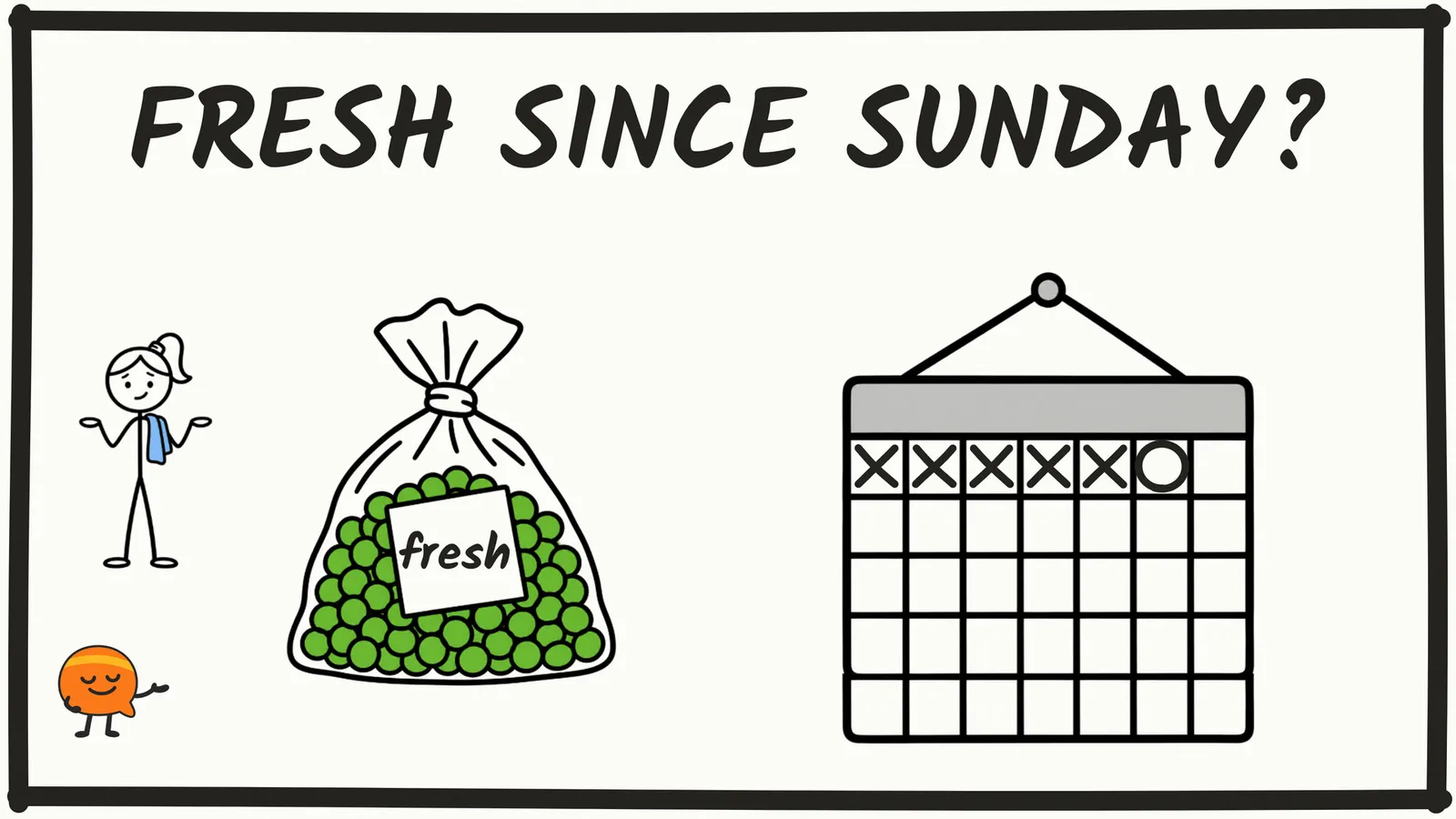
Frozen vegetables still contain vitamins, and freezing alone doesn't put a bag ahead of or behind a fresh bunch. "Fresh" says how it's sold, not when it was picked. "Frozen" says nothing about what happened before the freezer.
When labs compare them, they often can't find a clear difference, and on vitamin C the frozen sample is sometimes ahead. Real vegetables vary; the identical twin peas and clocks in our video are made up.
Are frozen vegetables as nutritious as fresh?
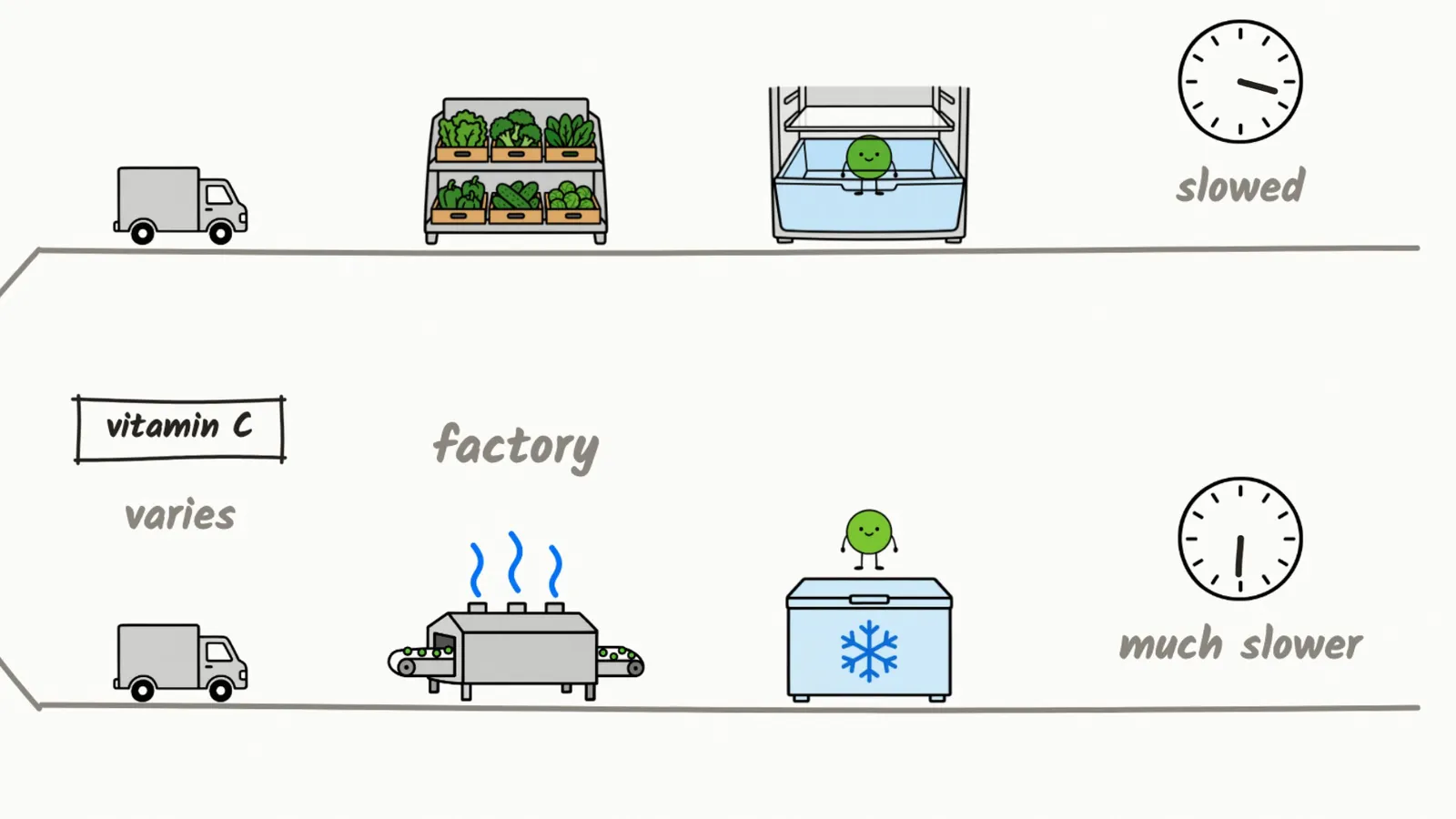
They can be. Both roads start at picking, because a picked vegetable keeps changing, and delays after harvest can deteriorate flavour, texture, colour and nutrients. One road runs to a shop and a fridge, where cold slows change without stopping it. The other runs to a factory, where blanching costs something in one step and a freezer slows things much further.
A 2007 review found nutrient loss in fresh produce during storage and cooking "may be more substantial than commonly perceived", and that frozen products go on losing some nutrients in storage through oxidation. The Canned Food Alliance commissioned it, according to one of its authors.
Do fresh vegetables lose vitamins in the fridge?
Some can, but vitamins don't all fade on the same schedule, so there is no countdown to watch. At the shop, you usually can't tell when a pea was picked, so one study started its clock there: produce bought at retail, then refrigerated for 5 days to model home habits. That number counts from purchase, not harvest. A few days in the fridge is ordinary life for a vegetable.
What does blanching do to frozen vegetables?
The frozen road has a wait too, and FAO says delays before processing should be kept short. Then comes blanching: brief exposure to boiling water or steam to inactivate enzymes that can cost a vegetable flavour, colour and texture and that freezing only slows.
The cost shows up in the vitamins: the initial heat can reduce vitamin C and the B vitamins. How much varies with the vegetable and the process, and it isn't always small. Home-preserving guidance adds that blanching also helps slow vitamin loss afterwards, while overblanching costs more.
Water in the cells expands as it freezes and can rupture cell walls, which is why thawed spinach goes floppy. That's texture, not a vitamin reading. And freezing doesn't kill microorganisms, while blanching destroys only some, so prepare frozen vegetables the way the packet says.
Which keeps more vitamins, fresh or frozen?
Neither, across the board.
The five-day study. Li and colleagues measured vitamin C, beta-carotene and folate in broccoli, spinach, green peas, strawberries and other produce, each fresh from the shop, after the five days, and frozen. Most comparisons showed no significant difference. Where differences appeared, frozen measured above fresh-stored more often than the reverse, but frozen broccoli, blanched on its way, had significantly less folate than both fresh groups. A Frozen Food Foundation grant paid for the study, and the foundation chose the foods and nutrients.
The second study. Bouzari and colleagues compared refrigerated and frozen storage in 8 foods: corn, carrots, broccoli, spinach, peas, green beans, strawberries and blueberries.
- Vitamin C: no significant difference in five, higher in frozen for three.
- Vitamin B2 (riboflavin): higher in frozen broccoli, lower in frozen peas, no significant difference in the rest.
- Vitamin E: higher in frozen for three, no significant difference in the rest.
- Beta-carotene: lower in frozen peas and carrots; the authors say it "was found to decrease drastically in some commodities".
USDA's project record names the American Frozen Food Institute Research Foundation as funder of this work; we couldn't open the paper's own funding statement.
The measurements can still be right. Funding is a reason not to stretch them past the foods they measured, and neither study measured anyone's health.
Are frozen berries as nutritious as fresh?
Berries usually skip the hot dip: FAO's berry instructions list no blanching step, and it says only a few types of fruit are blanched to inactivate enzymes. In the five-day study, strawberries showed no significant folate difference across all three groups. That's one berry and one vitamin, not a promise about every punnet. What blending does is its own episode.
Do frozen vegetables count the same as fresh?
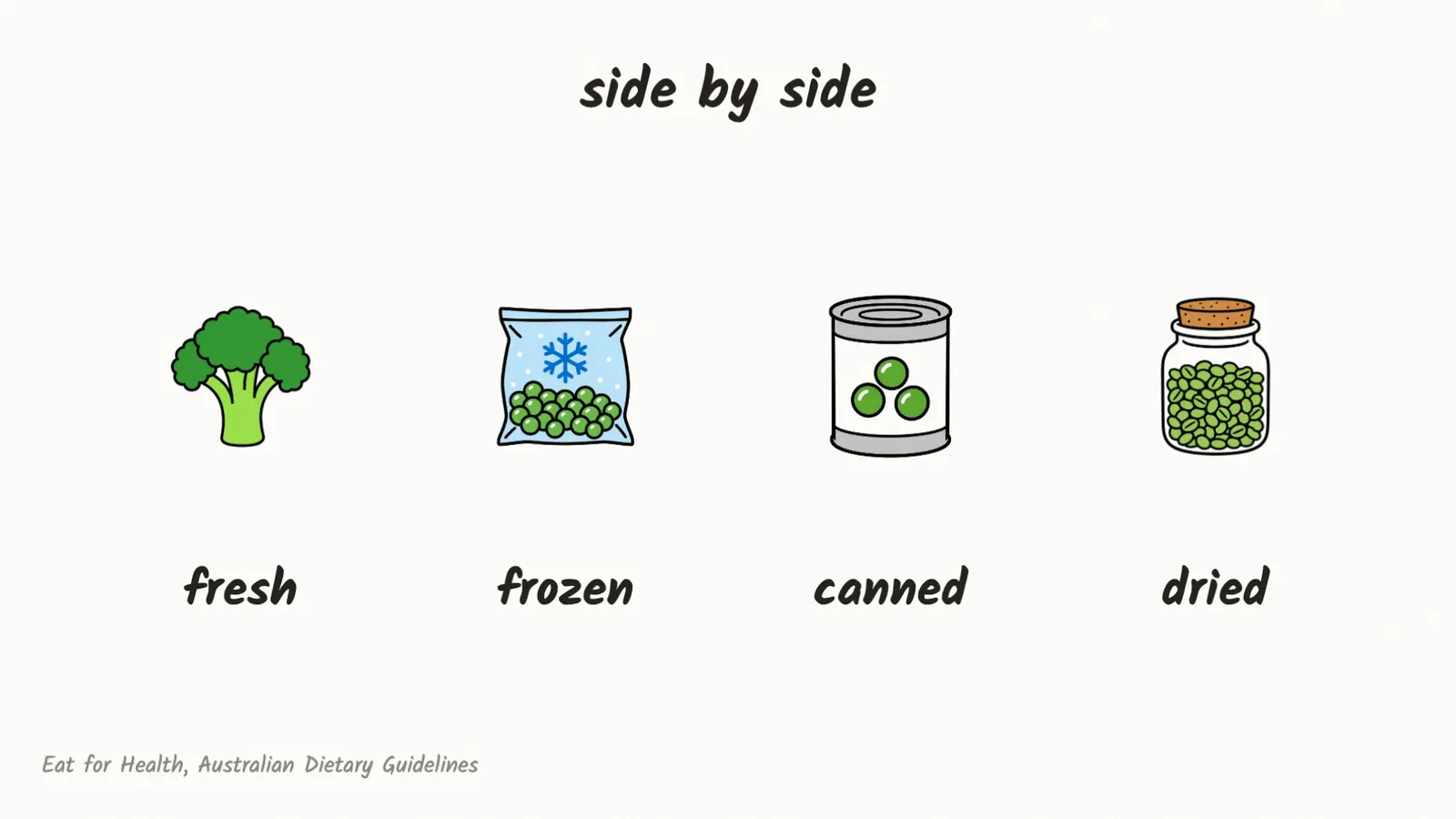
In the guidance, yes. Australia's Eat for Health lists fresh, frozen, canned and dried vegetables, and the NHS 5 A Day page includes frozen. These are food-group guides, not proof of identical vitamin levels. There's no new shopping rule here, and no reason to change which version you enjoy. Pick whichever you'll actually cook.
Nobody can read a vegetable's clock, at the shop or in an app, and that includes kcalm. If kcalm is where you log, describe the peas with their history (frozen, microwaved, a knob of butter), then look over the estimate in the chat and correct the amount if it missed.
What this does not mean
- Not that frozen is better, or that fresh is. The result changes with the food and the vitamin.
- Not that they're identical. "No significant difference" only means the test couldn't separate them.
- Not that freezing creates vitamins. Changes in moisture can misrepresent nutrient content.
- Not that five days is a limit. It was one study's storage time.
- Not a reason to eat less of anything, and not a finding about your health: these studies measured food, not people.
How we made this
This article and its video were made by kcalm, the team behind the kcalm food-logging app. The video is narrated by an AI voice, and the twin peas, their clocks and the cook's week are made up. The research was drafted with an AI research assistant from the sources below and fact-checked by a second AI model; no dietitian or doctor has reviewed it. The Bouzari and Rickman details here come from the published abstracts. This is general food-science education, not individual medical advice. Checked 8 November 2026. Corrections are welcome at [email protected].
Sources
Studies, with who paid for them:
- Li L, Pegg RB, Eitenmiller RR, Chun JY, Kerrihard AL (2017). Selected nutrient analyses of fresh, fresh-stored, and frozen fruits and vegetables. Journal of Food Composition and Analysis 59:8-17. University abstract. Funded by a Frozen Food Foundation grant; the foundation chose the foods and nutrients (the grant, the choice and the detailed folate results are in the full paper).
- Bouzari A, Holstege D, Barrett DM (2015). Vitamin retention in eight fruits and vegetables: a comparison of refrigerated and frozen storage. Journal of Agricultural and Food Chemistry 63(3):957-962. Industry-supported project: American Frozen Food Institute Research Foundation, per USDA's project record.
- Rickman JC, Barrett DM, Bruhn CM (2007). Nutritional comparison of fresh, frozen and canned fruits and vegetables. Part 1. Vitamins C and B and phenolic compounds. Journal of the Science of Food and Agriculture 87:930-944. Commissioned by the Canned Food Alliance, per coauthor Barrett (Barrett, 2007, Food Technology 61(4)).
Guidance:
- National Center for Home Food Preservation. Blanching Vegetables, from So Easy to Preserve, 2014 edition.
- McCoy L, Patel D. Grow It, Eat It, Freeze It: The Basics of Freezing Foods at Home. University of Maryland Extension, 2018, updated 2026.
- FAO. Freezing of fruits and vegetables: Introduction to freezing.
- Eat for Health (Australian Dietary Guidelines). Vegetables and legumes / beans.
- NHS. 5 A Day: what counts?
Funding record:
- American Frozen Food Institute / Frozen Food Foundation. Nutrition Research.
Video transcript
The full narration of the video, with its chapter times. Watch it on YouTube: Are Frozen Vegetables as Nutritious as Fresh? They Can Be
0:00 Are frozen vegetables healthy?
The pea on the left of the cook's fork spent five days in a fridge drawer, in a bag that says fresh. The one beside it got a dip in boiling water and was frozen solid. Yet when labs measure vegetables like these, they often can't find a clear difference, and on vitamin C, the frozen one is sometimes ahead. How on earth is the scalded, frozen pea keeping up? Are frozen vegetables really as nutritious as fresh? These two go back a long way: one pod, one plant, one morning. Two peas in a pod. For once, literally. Real vegetables vary, so no lab gets perfect twins. Ours are made up, which is handy, because made-up peas can carry clocks.
0:38 Are frozen vegetables as nutritious as fresh?
Both clocks start at picking, because a picked vegetable keeps changing, and some vitamin C can break down as it waits. Then the twins split up. The fresh one rides to a shop and a fridge, where cold slows its clock without stopping it. The frozen one rides to a factory, where a hot bath jumps its clock ahead in one go, then a freezer slows it much further. Frozen vegetables can be as nutritious as fresh ones, depending on the vegetable, the vitamin and everything that happened between harvest and your plate. Blanching, the quick hot dip before freezing, can cost some vitamins up front, while fresh vegetables can lose some as they're stored.
1:13 Do fresh vegetables lose vitamins in the fridge?
Follow the fresh twin first. At the shop, you usually can't tell when a pea was picked. Vegetables don't come with birth certificates. So the cook's five days started at the checkout on Sunday, and one lab study copied exactly that: produce bought at a shop, then kept in a fridge for five more days. On purpose. With clipboards. The fridge drawer is a waiting room, and the magazines are terrible. Yes, some vitamins keep fading in there, but they don't all fade on the same schedule, so this isn't a countdown. A few days in the fridge is ordinary life for a vegetable.
1:47 What does blanching do to frozen vegetables?
Now the frozen twin. Its road has a waiting room too, between the field and the factory, and a long wait there can cost nutrients as well. Then comes blanching, a quick dip in boiling water or steam. It's a bath so short it's more of a dare, but it switches off the pea's own enzymes, so they can't keep tinkering with its colour, flavour and texture in the freezer. The price is that jump on its clock: vitamin C and some B vitamins don't cope well with heat and water, so some can be lost in the dip, and how much varies with the vegetable and the process. There's no single percentage, and it isn't always small. The freezer brings its own side effect: ice. Growing crystals can burst cell walls, which is why thawed spinach flops like a wet sock. That's texture, not a vitamin reading. Floppy isn't empty. One thing the freezer can't do is kill germs, so prepare frozen vegetables the way the packet says. A snowflake is not a permission slip.
2:46 Which keeps more vitamins, fresh or frozen?
When the twins meet again, who's ahead? The five-day study compared fruits and vegetables three ways: fresh from the shop, fresh after the five days, and frozen. Most comparisons showed no significant difference, which means the test couldn't separate them, not that they're identical. A second team compared fridge storage with freezer storage in eight fruits and vegetables. On vitamin C, the fridge-stored produce didn't come out ahead in any of them: five showed no clear difference, and in three, the frozen samples measured higher. Swap the vitamin, and the picture changes. In that same study, frozen broccoli had more vitamin B2 than fridge-stored broccoli, but frozen peas had less. Sorry, frozen twin. And in the five-day study, frozen broccoli, blanched on its way, had less folate than both fresh groups. One vegetable, two vitamins, opposite answers. Both studies had funding from the frozen food industry, so the freezer aisle chipped in for the research, and in the five-day one, the funder chose which foods and nutrients got tested. The measurements can still be right. They just don't stretch past the foods they measured, and neither study measured anyone's health.
3:51 Are frozen berries as nutritious as fresh?
Berries take a shortcut. Freezing instructions for berries generally skip the hot dip, which spares everyone a blanched raspberry. In the five-day study, strawberries showed no clear difference in folate across all three groups. So frozen berries can hold up, but that's one berry and one vitamin, not a promise about every punnet. And if yours are heading into a blender, what blending does is its own episode.
4:14 Do frozen vegetables count the same as fresh?
Australia's dietary guidelines list fresh, frozen, canned and dried vegetables side by side, and in Britain, the National Health Service's five a day includes frozen. So there's no new shopping rule here, and no reason to change which version you enjoy. Pick whichever you'll actually cook. And those clocks? Nobody can read them, not at the shop and not in an app, and that includes kcalm, whose team made this video. What an app can use is what you tell it. So if kcalm is where you log, describe the peas with their history: frozen, microwaved, with a knob of butter. Then look over the estimate in the chat and correct the amount if it missed. Friday's dinner puts the twins back together on one fork. One waited in a fridge. One took a hot bath, then waited in a freezer. And the word on each bag only ever named the last stop. Never the whole trip. Both studies and their funders are listed below this video, and at kcalm.app. By now both twins are eaten, and all that's left is the pod they grew in.
Ready to track smarter?
Join thousands who use kcalm for calorie tracking. AI-powered food recognition, scientifically-validated calculations, and zero anxiety.