How Accurate Is AI Calorie Counting From a Photo?
AI photo calorie counts are estimates: oil, hidden food and portion depth have to be assumed. What the studies found, and how added details help.
kcalm editorial team
Prepared with AI assistance
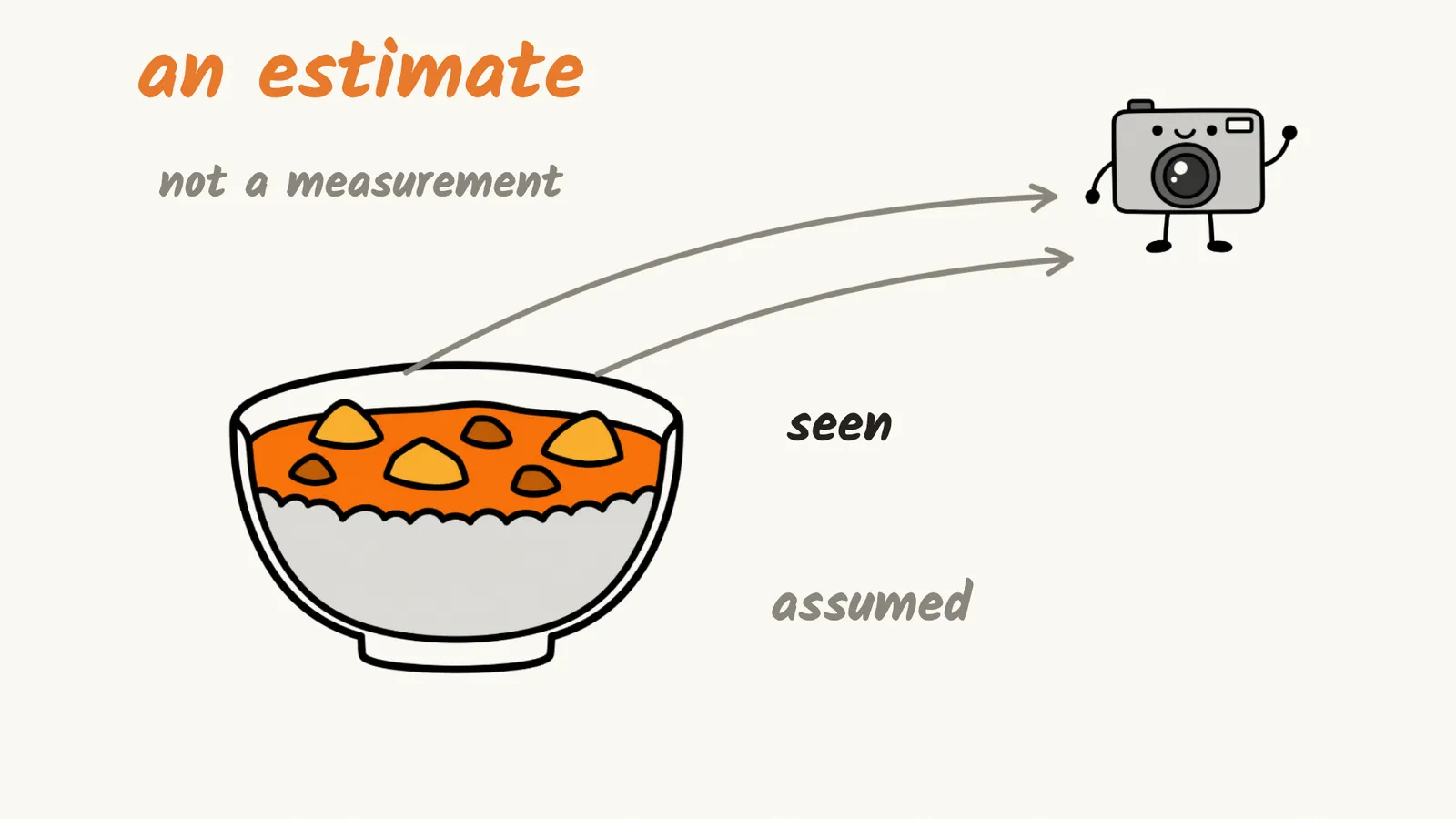
How accurate is AI calorie counting from a photo? It's an estimate, not a measurement: oil, the food underneath and portion depth can't be reliably seen, so they have to be assumed. In one 2025 study, two AI chatbots tested in 2024 estimated calories in 52 food photos with an average error of about 36 percent, counting misses high and low.
kcalm makes an app that logs food from photos, so we have a commercial interest in this question. Photo estimates have limits, including ours. This is general information, not medical advice.
What does an app do with a food photo?
Recognizing your dinner is not the same as knowing its calories. Here is a simple model of the problem, not a description of any one app:
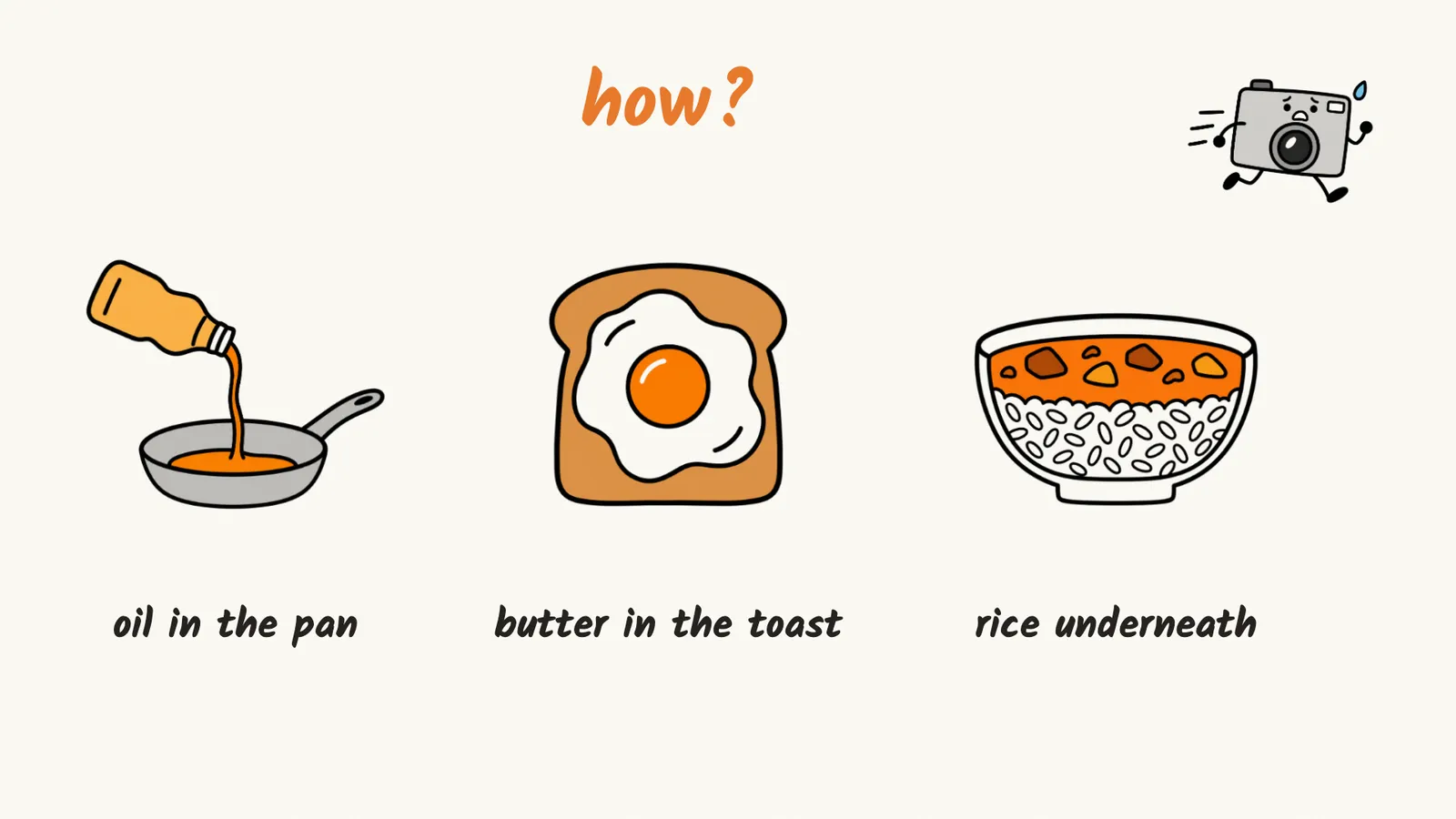
- The surface. The camera records what is on top; rice under a curry or butter melted into toast is hidden. A 2024 study names butter, oils, sauces and condiments as a known limit of food image recognition (Li et al., 2024).
- The name. One dish name covers many recipes: a stir fry can use a little oil or a lot.
- The amount. From above, a photo shows the outline of the food, but its depth and amount are hard to judge.
- The lookup. Nutrition information is attached for an assumed food and amount.
So the result depends on the food, the amount and the recipe, and the photo may show each only partly.
How accurate is AI calorie counting in studies?
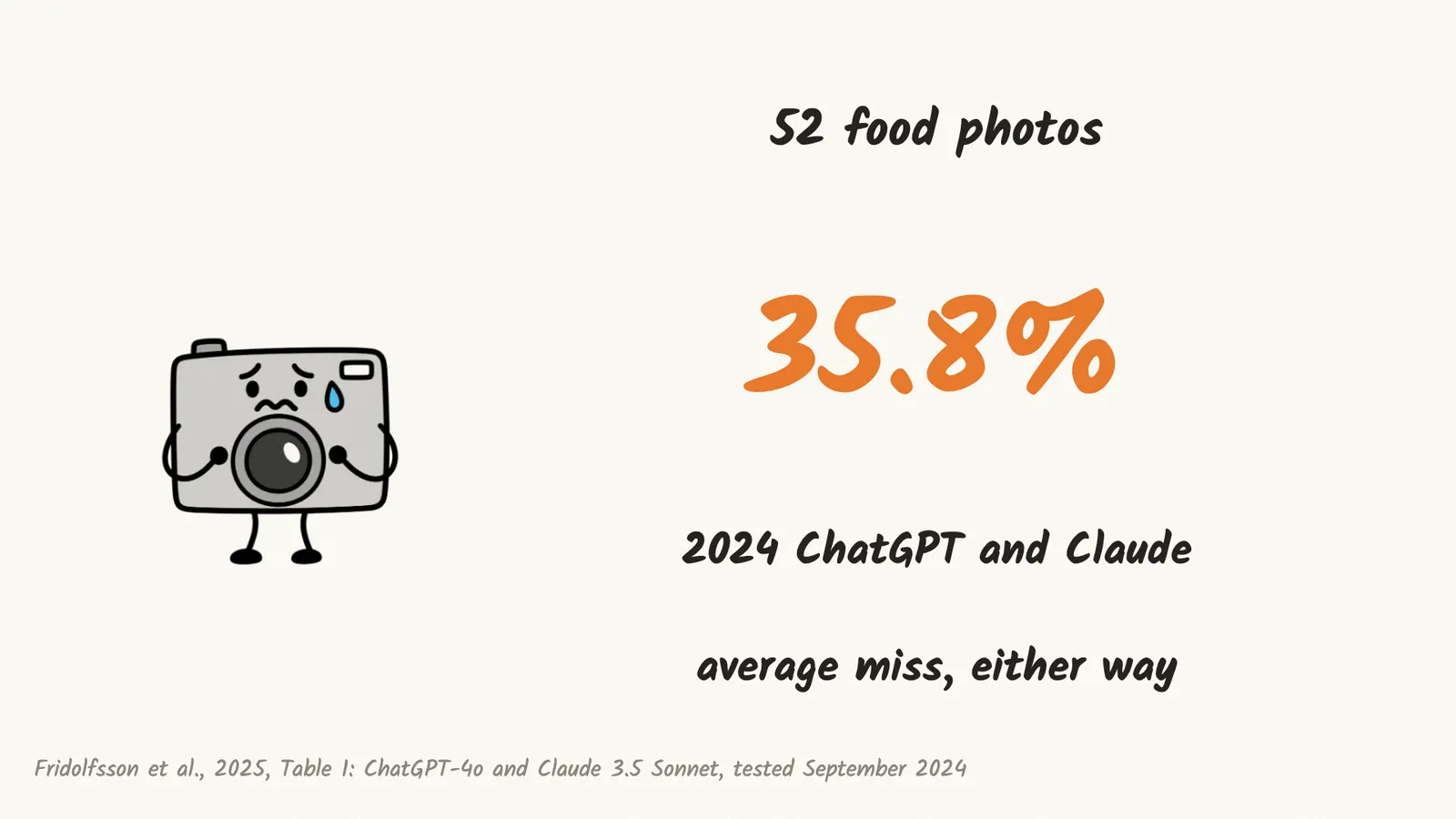
There is no single accuracy figure; it depends on the system, the food and the reference method. In a 2025 study, Fridolfsson and colleagues gave 52 food photos to three AI chatbots in September 2024. ChatGPT-4o and Claude 3.5 Sonnet each had an average absolute calorie error of 35.8 percent, counting overestimates and underestimates; Gemini 1.5 Pro averaged 64.2 percent. All three underestimated bigger portions more, which the authors link to food hidden behind other food (Fridolfsson et al., 2025). That is a limit of the estimator, not a judgment about portions, and the study did not test kcalm or any calorie app.
In the Li study, one app's photo feature left out the butter on eggs on toast and came in 35 percent low for that dish (Li et al., 2024, Table 10). That is one dish and one app version, not an average.
Are people better at guessing calories?
In a 2018 online study, 2,028 self-selected respondents estimated the calories in 20 food pictures and averaged about 5 of 20 within 20 percent of the study's reference values, which came from food websites and menus. The five nutrition experts tested also averaged about 5, a very small comparison (Zhou et al., 2018).
Self-reported intake has gaps too. A 2019 review of 59 studies compared food records, recalls, questionnaires and other self-report methods with energy expenditure measured by doubly labelled water, and most found underreporting (Burrows et al., 2019). That comparison assumes intake and energy use roughly balance, and it cannot check any single meal. Underreporting is not a judgment about honesty: memory, portion sizes and the recording itself all add error.
These studies used different tasks and references, so they do not rank people against apps. Every common method gives an estimate.
What makes a photo estimate better?
Replacing a guess with something you know reduces the guesswork.
In a 2022 study of CALO mama, a Japanese photo app, the average estimate across 120 meals was 57 calories below the reference value when the app worked alone, and 9 calories above it after research staff corrected the foods and portions; each meal's result was the mean of four staff entries (Sasaki et al., 2022). These are average signed differences, not the typical size of a miss, so an average near zero can hide large misses both ways. The app's maker funded the study.
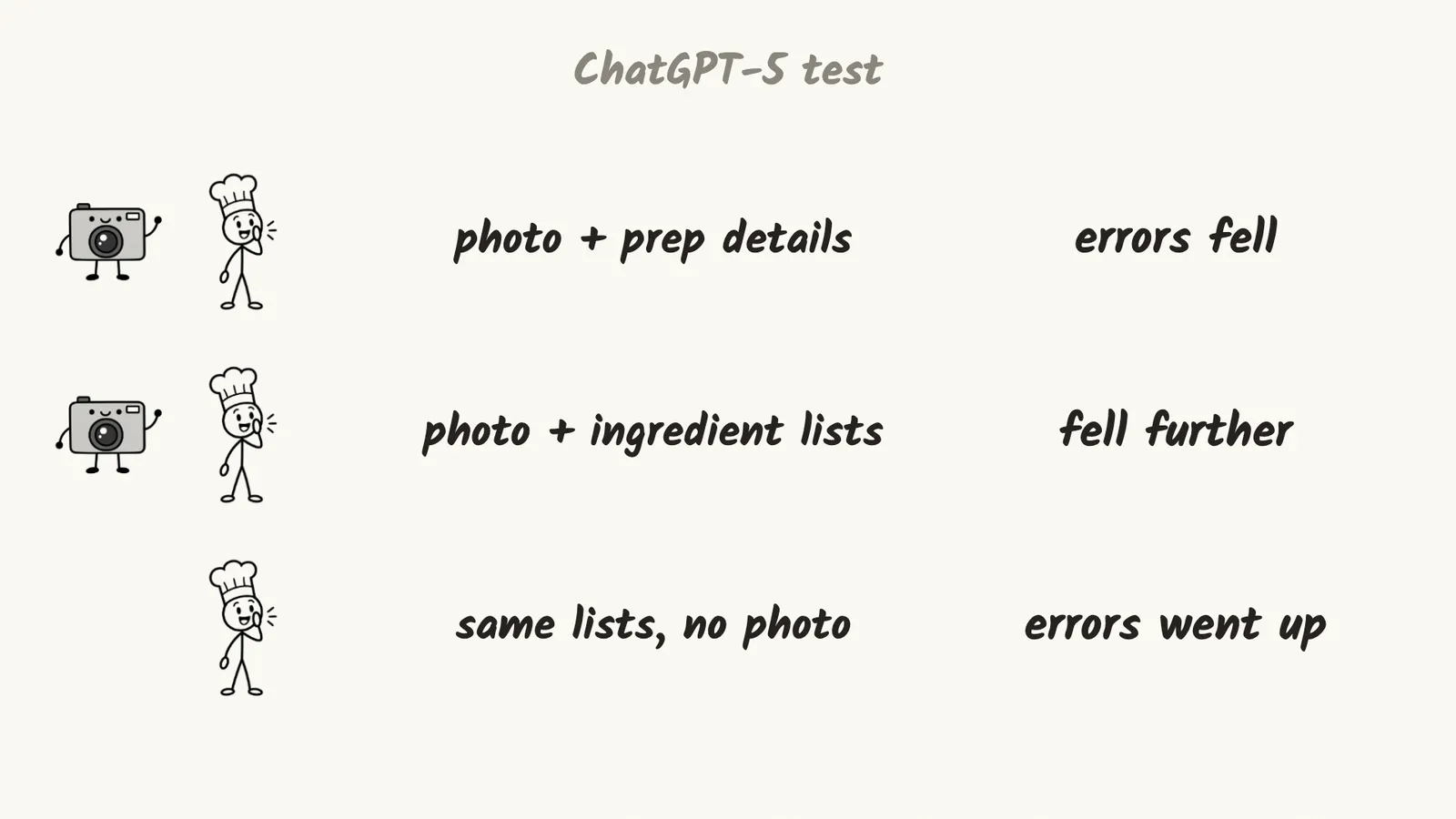
A 2025 test of ChatGPT-5 on 195 dishes found lower average errors when researchers added preparation details, such as the types and amounts of fats and sweeteners, and lower still with full ingredient lists and amounts. With those same lists, removing the photo increased average error, so the photo still helps (Rodríguez-Jiménez et al., 2025).
What does this mean at your next meal?
If you choose to log a meal by photo, treat the number as a starting estimate and add details you already know:
- "There's rice under the curry."
- "The sauce has cream in it."
- "The whole pan used a tablespoon of oil, and this is about half."
Oil in the pan and oil on your plate differ, so this still leaves uncertainty. The tablespoon is an example, not a suggested amount.
In kcalm, the app that made this article, you can correct portions or ingredients like this in chat. That makes an estimate better informed, not exact.
You do not need to investigate every bite. An estimation error is not a reason to skip food or make up for it later. If tracking starts to feel stressful, it is okay to step away. In Australia, the Butterfly Foundation National Helpline is 1800 33 4673; elsewhere, look for your local eating disorder support service.
What this does not mean
- These studies do not establish a universal accuracy percentage for photo logging, or a guaranteed error limit for your meal. None tested kcalm.
- 35.8 percent is an average for two chatbots on 52 photos in 2024, not an error band for your meal or a correction for your log.
- Errors do not necessarily cancel out over time. Missing the same ingredient again and again pushes every entry the same way.
Frequently Asked Questions
How accurate is AI calorie counting from a photo?
It depends on the system and the food. In a 2025 study of 52 food photos tested in September 2024, ChatGPT-4o and Claude 3.5 Sonnet had an average absolute calorie error of about 36 percent and Gemini 1.5 Pro about 64 percent. Those results describe those models on those photos, not kcalm or any calorie app.
Why do photo calorie apps get meals wrong?
A photo shows the surface. Oil, butter, sauces, food under the top layer and the depth of a portion can be hidden or hard to judge, so the estimate has to assume them.
Can a photo app measure portion size?
Not reliably from one ordinary photo. From above, a photo shows the outline of the food, but its depth is hard to judge, so two bowls can look the same from the top and hold very different amounts.
Does telling the app what is in the meal help?
On average, yes, in the studies we found. In a 2025 test of ChatGPT-5 on 195 dishes, average errors fell when researchers added preparation details such as the type and amount of fat, and fell further with full ingredient lists and amounts; with the same lists and no photo, average error rose. Details reduce the guesswork but cannot make an estimate exact.
How we made this
Made by kcalm, an iPhone app for logging food by photo, text or voice. AI narration. Researched from the sources below and checked by a separate AI fact-check; not reviewed by a dietitian. General information, not medical or nutrition advice. Published October 2026. Corrections are welcome at [email protected].
Sources
- Fridolfsson J, Sjöberg E, Thiwång M, Pettersson S (2025). Performance Evaluation of 3 Large Language Models for Nutritional Content Estimation from Food Images. Current Developments in Nutrition. https://pmc.ncbi.nlm.nih.gov/articles/PMC12513282/ (PubMed: https://pubmed.ncbi.nlm.nih.gov/41081011/)
- Li X, Yin A, Choi HY, Chan V, Allman-Farinelli M, Chen J (2024). Evaluating the Quality and Comparative Validity of Manual Food Logging and Artificial Intelligence-Enabled Food Image Recognition in Apps for Nutrition Care. Nutrients. https://doi.org/10.3390/nu16152573 (full text: https://pmc.ncbi.nlm.nih.gov/articles/PMC11314244/)
- Zhou J, Bell D, Nusrat S, Hingle M, Surdeanu M, Kobourov S (2018). Calorie Estimation From Pictures of Food: Crowdsourcing Study. Interactive Journal of Medical Research. https://doi.org/10.2196/ijmr.9359
- Burrows TL, Ho YY, Rollo ME, Collins CE (2019). Validity of Dietary Assessment Methods When Compared to the Method of Doubly Labeled Water: A Systematic Review in Adults. Frontiers in Endocrinology. https://doi.org/10.3389/fendo.2019.00850
- Sasaki Y, Sato K, Kobayashi S, Asakura K (2022). Nutrient and Food Group Prediction as Orchestrated by an Automated Image Recognition System in a Smartphone App (CALO mama): Validation Study. JMIR Formative Research. https://doi.org/10.2196/31875
- Rodríguez-Jiménez M, Martín-del-Campo-Becerra GD, Sumalla-Cano S, Crespo-Álvarez J, Elio I (2025). Image-Based Dietary Energy and Macronutrients Estimation with ChatGPT-5: Cross-Source Evaluation Across Escalating Context Scenarios. Nutrients. https://doi.org/10.3390/nu17223613 (PubMed: https://pubmed.ncbi.nlm.nih.gov/41305663/, full text: https://pmc.ncbi.nlm.nih.gov/articles/PMC12655113/)
Video transcript
The full narration of the video, with its chapter times. The video is coming soon.
0:00 Can a photo count calories it can't see?
Snap a photo of your dinner, and an app can hand you a calorie count in seconds. Which is a neat trick, because that photo showed up after the cooking was over. It never saw the oil go into the pan, or the butter melt into the toast. And it can't see the rice hiding under the curry. So how can a photo count calories it can't see? Full disclosure: kcalm makes a photo-logging app, so we're not neutral here. And if the answer is bad news for photo apps, that includes ours.
0:26 Doesn't the app just recognize the food?
First, the obvious guess: it recognizes the food, so it knows the calories. But a name isn't a recipe, and noodles don't come with a receipt. Stir-fried noodles could mean a splash of oil or a generous pour, and from above, the two can look a lot alike. Second guess: it measures the portion. But from above, a photo shows the outline, and depth is hard to judge. Two bowls can look identical from the top, while one holds far more food.
0:55 Why is a photo calorie count only an estimate?
So what happens to everything the camera can't see? No x-ray vision, sadly. A camera only catches light bouncing off the surface, so everything underneath gets filled in with guesses. That's the whole answer. A photo calorie count is an estimate, not a measurement: whatever a photo can't reliably show, like the oil, the food underneath or how deep it goes, has to be assumed.
1:18 How accurate is AI calorie counting from photos?
So how good are those guesses? In a 2025 study, researchers gave 52 food photos to AI chatbots. The 2024 versions of ChatGPT and Claude missed the calories by about 36 percent on average, counting misses high and low. And the butter on that toast? Researchers caught that one too. In a 2024 study, one app's photo feature left the butter out of eggs on toast and came in 35 percent low. One dish, one app, but there's the blind spot in action. kcalm wasn't in either test. But these blind spots aren't one app's problem: any single photo has them, ours included.
1:55 What makes a photo calorie estimate better?
So what helps? A sharper photo can't show what happened in the kitchen, but a witness who was there can. Tell it what the photo missed: there's rice under the curry, and the toast was buttered. In a 2025 test of ChatGPT 5, average errors fell when researchers added preparation details, like the type and amount of fat, and fell further with full ingredient lists and amounts. The twist? Keep the lists, take away the photo, and the errors went up. So the photo was pulling its weight. It just needed a witness. In kcalm, the app that makes this channel, that's what the chat is for: snap the photo, then correct the ingredients or the portion. That makes the estimate better informed, not exact.
2:37 Is a photo calorie count ever exact?
Now, the fine print. Study numbers are averages, so a single meal can miss by more, or by less. Some of the oil stays in the pan. And if you ate out, you weren't in the kitchen either, so you're both guessing. None of which means you need to investigate every bite. An estimate that's off is never a reason to skip food, or to make up for it later. So, can a photo count what it can't see? No. It fills in the blanks. The camera showed up after the cooking, and whoever was there can fill in a few more. This is Food, Explained, from kcalm.app. Next time: why do two apps disagree about the same meal?
Ready to track smarter?
Join thousands who use kcalm for calorie tracking. AI-powered food recognition, scientifically-validated calculations, and zero anxiety.