Menstrual Cycle Calorie Burn: What Wearable Data Shows
The luteal-phase rise in calorie burn is real but small — controlled studies put it at roughly 30 to 120 kcal a day (about 3 to 5 percent), not the 200 to 300 kcal figures that circulate online. A 2020 PLOS ONE meta-analysis of 26 studies in 318 women found a statistically significant but modest rise in resting metabolic rate, while a 2025 meta-analysis of 15 datasets found energy intake climbs about 168 kcal a day in the luteal phase — usually outpacing the extra burn. What the strongest metabolic-ward and wearable studies say about menstrual-cycle calorie burn, why fitness rings estimate rather than measure it, and how to adjust tracking without chasing a daily number.
kcalm editorial team
Prepared with AI assistance
Your calorie burn does rise a little in the luteal phase — the roughly two weeks before your period — but the effect is smaller than most fitness trackers and social-media claims suggest. Controlled studies put the rise in resting energy expenditure at about 30 to 120 kilocalories a day, or 3 to 5 percent, not the 200 to 300 kcal figures that circulate online. And because appetite tends to climb by a similar or larger amount — around 168 kcal a day on average — the extra burn rarely opens up a free eating window.
If your smart ring tells you that you are "burning more" in the week before your period, it is not exactly wrong, but it is estimating rather than measuring, and the number it lands on is easy to over-read. The menstrual cycle genuinely nudges metabolism, body temperature, and appetite — yet the size of each nudge matters enormously for anyone trying to track calories through the month. This guide walks through what the strongest metabolic-ward and wearable studies actually found, why the burn side and the appetite side pull in the same direction, and how you might adjust tracking without chasing a number that moves every day.
The sources below come from peer-reviewed journals: a 2020 PLOS ONE systematic review and meta-analysis, a 2025 Nutrition Reviews meta-analysis of energy intake, a 2026 Frontiers in Physiology systematic review, a 2020 metabolic-chamber study, a 2025 Journal of Clinical Endocrinology & Metabolism trial, and a 2019 BMC Women's Health validation of the Oura ring. Where findings vary by study or by individual, the range is reported rather than a single tidy number.
Does calorie burn actually increase during the luteal phase?
On average, yes, but modestly. A 2020 PLOS ONE meta-analysis of 26 studies in 318 women found a small yet statistically significant rise in resting metabolic rate during the luteal phase (effect size 0.33, p less than 0.001). The increase is real at the group level, but small enough to hide inside normal day-to-day variation.
The luteal phase begins after ovulation, when progesterone rises and body temperature ticks up. Progesterone has a mild thermogenic effect, and warmer tissue costs slightly more energy to maintain, which is the leading explanation for a higher resting burn. Estrogen, meanwhile, shifts the body toward burning more fat for fuel. Together these hormonal changes lift resting energy expenditure a little — but "a little" is the operative phrase, and the size of the shift is where popular advice tends to overshoot.
Two details from that meta-analysis are worth holding onto. First, the effect was consistent enough across 26 studies to reach significance. Second, when the researchers looked only at studies published since 2000 — which used tighter methods for confirming cycle phase — the effect shrank to an effect size of 0.23 and was no longer significant (p = 0.055). Better measurement produced a smaller, fuzzier signal, which is usually a sign that early research overstated the effect. If you want the mechanics of how resting burn feeds into your daily total, our guide to total daily energy expenditure walks through the full calculation.
How many extra calories does the luteal phase really burn?
Measured studies land between roughly 30 and 120 kilocalories a day. A 2026 Frontiers in Physiology systematic review of seven studies (124 women) reported luteal increases of about 30 to 120 kcal daily, with four studies reaching significance — for example plus 121.6 kcal a day in one 2022 trial and plus 37 to 58 kcal in a 2024 study.
The honest summary is that the burn is real but small, and it varies a lot between people. A 2020 metabolic-chamber study in nine women (Zhang and colleagues) found sleeping energy expenditure rose 6.9 percent in the luteal phase alongside a 0.27°C rise in core body temperature — but the temperature change alone could not explain the whole increase, pointing to additional hormonal mechanisms. The table below puts the main measured findings side by side so you can see the range rather than a single headline figure.
| Study (year) | Participants | Luteal-phase change | Significant? |
|---|---|---|---|
| PLOS ONE meta-analysis (2020) | 318 women, 26 studies | Effect size 0.33 for higher RMR | Yes (p < 0.001) |
| Frontiers systematic review (2026) | 124 women, 7 studies | +30 to +120 kcal/day range | 4 of 6 studies |
| Maury-Sintjago trial (2022) | Adults | +121.6 kcal/day | Yes (p = 0.004) |
| Malo-Vintimilla study (2024) | Adults | +37 to +58 kcal/day | Yes (p = 0.040) |
| Zhang chamber study (2020) | 9 women | +6.9% sleeping burn, +0.27°C | Yes (p = 0.033) |
| Post-2000 subgroup (2020) | 12 studies | Effect size 0.23 | No (p = 0.055) |
Why does the popular "200 to 300 calories a day" claim overshoot?
Because it blends two different things: a modest rise in what your body burns and a larger rise in what you feel like eating. The measured burn is 3 to 5 percent of resting metabolism, roughly 30 to 120 kcal. The bigger number people quote usually smuggles the appetite increase in alongside the metabolic one.
Viral wellness content often rounds the luteal-phase "boost" up to a comfortable 200 to 300 kcal a day, which conveniently sounds like permission for an extra snack. The measured metabolic rise rarely reaches that range. What does reach it, for many people, is hunger — and conflating the two is where the advice goes sideways. Your body is not burning an extra 300 kcal; it is asking for them, which is a different thing entirely with a different practical response.
That distinction matters because acting on the larger number can quietly erase a calorie deficit. If you eat back 250 kcal a day for the ten to fourteen days of the luteal phase on the belief that you burned it, that is roughly 2,500 to 3,500 kcal across the phase — enough to offset a week of careful tracking. Understanding the real size of the effect helps you respond to hunger honestly without over-correcting. The same over-estimation problem shows up in activity tracking, which we cover in why activity multipliers overestimate.
What do wearables like the Oura ring actually measure across your cycle?
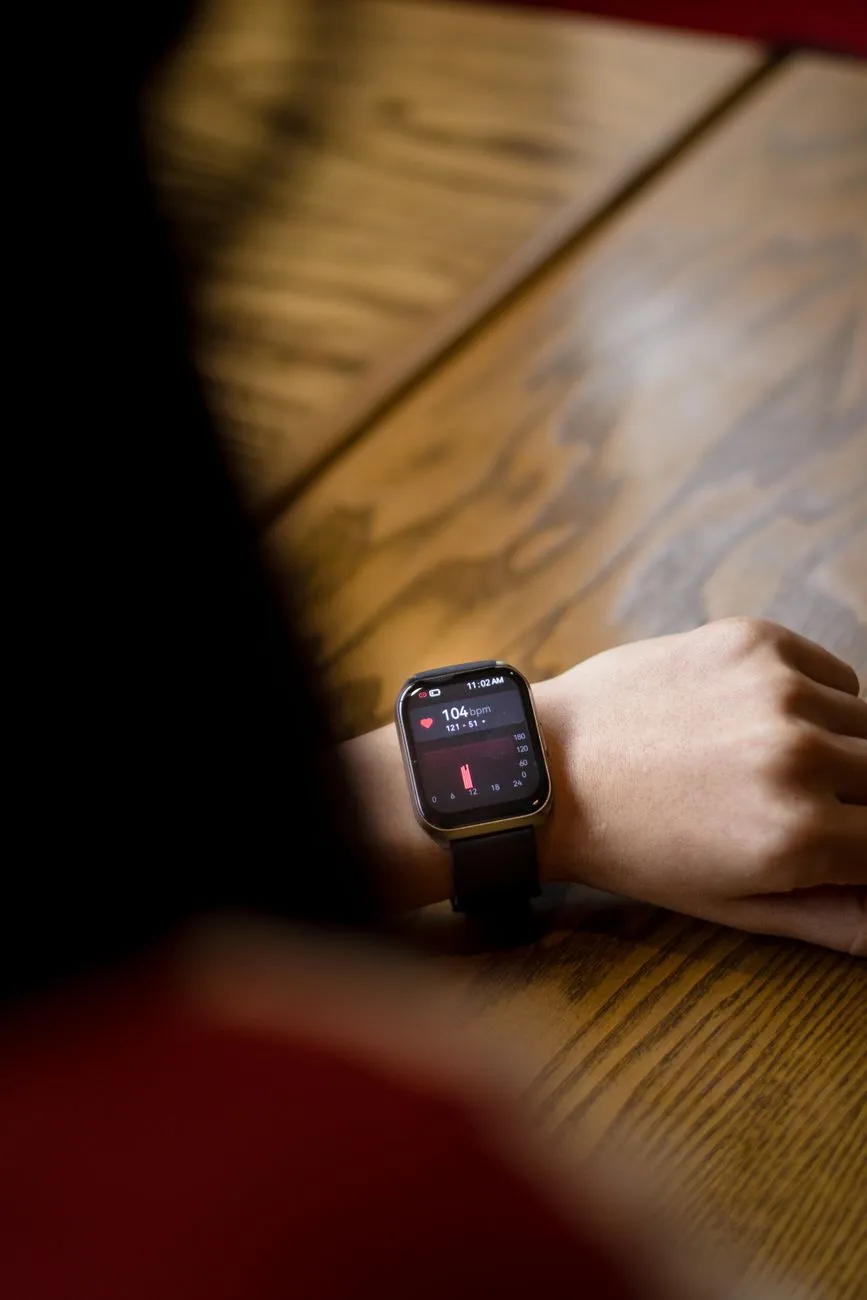
They measure temperature, not calories. A 2019 BMC Women's Health study in 22 women found nocturnal skin temperature rose about 0.30°C in the luteal phase and detected menstruation with 71.9 to 86.5 percent sensitivity. The ring infers your cycle phase from that shift, then estimates energy burn from a model — it does not measure your calorie burn directly.
This is the key thing to understand about the "cycle-aware" calorie numbers on a smart ring or watch. The hardware is genuinely good at reading the progesterone-driven temperature rise: the Oura study detected ovulation with about 83 percent sensitivity in the fertile window and roughly 95 percent within four days. But temperature is a phase signal, not an energy signal. Any calorie figure your device attaches is the output of an algorithm layered on top of that temperature reading, carrying all the uncertainty of a population model applied to one person. Our guide to wearables and nutrition tracking goes deeper on where these estimates drift.
So a wearable is a useful phase detector and a rough burn estimator, in that order. Treat the temperature-based cycle prediction as reasonably trustworthy and the calorie adjustment as a soft suggestion. If your ring nudges your target up by 150 kcal in the luteal phase, that is within the measured range and defensible; if it claims 350 kcal, it is almost certainly overstating the metabolic side.
Does the appetite side outweigh the burn side?
Often, yes. A 2025 Nutrition Reviews meta-analysis of 15 datasets (330 women) found energy intake rose about 168 kcal a day in the luteal phase — typically more than the measured rise in burn. So the premenstrual "I could eat everything" feeling usually reflects a genuine appetite shift that can outpace the small metabolic bump.
That 168 kcal average (standardised mean difference 0.69, p = 0.039) came with wide individual variation: some people showed almost no change, while others exceeded 500 kcal a day. The drivers are hormonal — falling estrogen removes some of its natural appetite suppression, and progesterone and related signals nudge hunger and cravings upward, especially for carbohydrate- and fat-rich foods. This is the same hormonal machinery we cover in our explainer on hunger hormones like ghrelin and leptin.
Two honest caveats keep this balanced. First, not every study agrees: some recent lab-based work using precise measurement found no significant difference in intake between phases, which suggests real-world environment and food availability matter as much as biology. Second, the appetite rise is not a failure of willpower — it is a predictable physiological signal. Naming it as hunger rather than as extra burn lets you decide how to respond, rather than eating on autopilot. Sleep quality feeds into this too; short sleep raises appetite on its own, as our piece on sleep debt and appetite explains.
How can you adjust calorie tracking across your cycle?
Gently, and with weekly averages rather than daily targets. Because the metabolic change is small and the appetite change is larger, averaging your intake across the week smooths out the noise far better than chasing a number that moves each day. The goal is to respond to real hunger without over-correcting for a burn that may be modest.
Here is a practical approach that respects both the biology and the wide person-to-person variation:
- Track by weekly averages, not daily targets. A single high-intake luteal day means little if your seven-day average stays near your goal. Judging each day in isolation tends to create guilt without improving results.
- Add a small, honest buffer if you want one. If eating slightly more in the luteal phase helps you feel steady, a modest increase of roughly 50 to 150 kcal a day sits within the measured range — no need to reach for 300.
- Separate hunger from habit. When cravings rise, a short pause to check whether you are physically hungry or responding to a cue can prevent a small appetite shift from becoming a large intake shift.
- Log your cycle phase alongside your food. A month or two of data shows you your own pattern, which is far more useful than any population average for planning.
- Judge progress over a full cycle. Water retention in the luteal phase can add a kilogram or two on the scale that has nothing to do with fat, so comparing the same phase month to month gives a cleaner read.
None of this requires a special "cycle diet." It is ordinary, flexible tracking with an awareness that appetite and burn both shift a little, in the same direction, at the same time of the month.
Frequently Asked Questions
Does your metabolism speed up before your period?
Slightly. Resting metabolic rate rises in the luteal phase by roughly 30 to 120 kcal a day, or 3 to 5 percent, driven mainly by progesterone's thermogenic effect and a small rise in body temperature. The effect is real at the group level but small enough to overlap with normal daily variation.
How many more calories should you eat in the luteal phase?
There is no single right number, and you may not need to eat more at all. If you choose to, a modest increase of around 50 to 150 kcal a day matches what studies measure for the metabolic rise. Much larger increases usually reflect appetite rather than burn, so responding to genuine hunger and tracking weekly averages tends to work better than a fixed rule.
Can a fitness tracker accurately measure menstrual calorie burn?
Not directly. Devices like the Oura ring read the luteal temperature rise well — around 0.30°C in validation studies — and use it to predict your cycle phase. But any calorie figure is an algorithm's estimate built on top of that temperature reading, not a direct measurement, so treat cycle-based calorie adjustments as rough suggestions.
Why am I so hungry before my period?
Falling estrogen removes some of its natural appetite suppression while progesterone and related signals raise hunger and cravings. A 2025 meta-analysis found energy intake rises about 168 kcal a day on average in the luteal phase, with some people exceeding 500 kcal. The hunger is a real physiological signal, not a lapse in discipline.
Does the follicular phase burn fewer calories?
Relatively, yes — the follicular phase (from the start of your period to ovulation) is the lower-temperature, lower-burn half of the cycle, which is why studies compare luteal readings against it. The difference is the same modest 3 to 5 percent, just viewed from the other side.
Should you change your workouts across your cycle?
The evidence for large performance swings is mixed and highly individual. Some people feel stronger in the follicular phase and more fatigued premenstrually, but calorie burn during exercise itself is governed mainly by intensity and body weight, not cycle phase. Tracking how you feel over a couple of cycles is more useful than any fixed template.
Sources
- Effect of menstrual cycle on resting metabolism: A systematic review and meta-analysis. PLOS ONE (2020). https://journals.plos.org/plosone/article?id=10.1371/journal.pone.0236025
- The Effect of the Menstrual Cycle on Energy Intake: A Systematic Review and Meta-analysis. Nutrition Reviews (2025). https://academic.oup.com/nutritionreviews/article/83/3/e866/7713894
- Resting metabolic rate fluctuations across the menstrual cycle: a systematic review. Frontiers in Physiology (2026). https://pmc.ncbi.nlm.nih.gov/articles/PMC13066135/
- Changes in sleeping energy metabolism and thermoregulation during menstrual cycle (Zhang et al.). PMC (2020). https://pmc.ncbi.nlm.nih.gov/articles/PMC6981303/
- Caloric Restriction, the Menstrual Cycle, and Sleep in Women Without Obesity (Kim et al.). Journal of Clinical Endocrinology & Metabolism (2025). https://academic.oup.com/jcem/article/110/11/3108/8052714
- Nocturnal finger skin temperature in menstrual cycle tracking: ambulatory pilot study using a wearable Oura ring (Maijala et al.). BMC Women's Health (2019). https://pmc.ncbi.nlm.nih.gov/articles/PMC6883568/
Ready to track smarter?
Join thousands who use kcalm for calorie tracking. AI-powered food recognition, scientifically-validated calculations, and zero anxiety.