SAFTE/FAST: How the US Military Predicts Fatigue
What the evidence tells us about nutrition and health.
The Sleep, Activity, Fatigue, and Task Effectiveness model — developed at Walter Reed Army Institute of Research — is the gold standard for biomathematical fatigue prediction. But it has zero nutrition inputs.
kcalm team
Nutrition and wellness
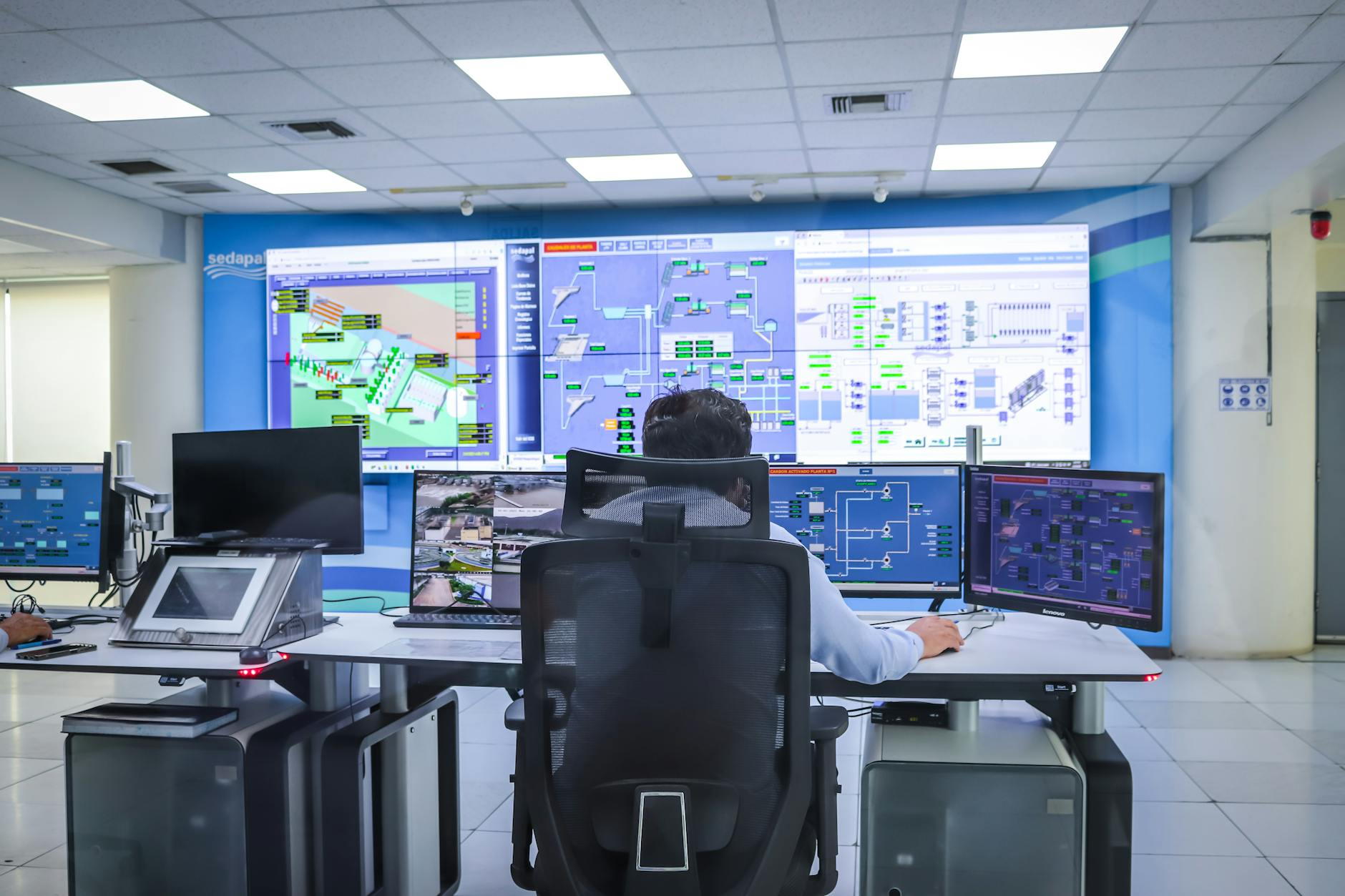
In the early hours of a combat operation, a drone operator must distinguish between a civilian vehicle and a military target. A helicopter pilot executes a low-altitude insertion after 20 hours of continuous duty. A logistics officer manages a supply chain disruption at 03:00 on the third day of sustained operations. In each scenario, the question is the same: how cognitively effective is this person right now, and can we predict that effectiveness before lives depend on it?
The SAFTE model — Sleep, Activity, Fatigue, and Task Effectiveness — and its companion scheduling software FAST (Fatigue Avoidance Scheduling Tool) represent the US military's answer to that question. Developed at the Walter Reed Army Institute of Research, SAFTE is the most extensively validated biomathematical fatigue model in operational military use. It has been adopted by every branch of the US Armed Forces and has influenced fatigue risk management policies worldwide.
This article examines SAFTE's architecture, validation, operational deployment, and the critical gap it reveals — the absence of nutritional inputs — that opens the door for next-generation cognitive performance prediction.
Background and Development
The Origin Story
SAFTE was developed by Dr. Steven Hursh and colleagues at the Walter Reed Army Institute of Research (WRAIR) in the late 1990s and early 2000s. The impetus was practical: the US military needed a tool that could take a soldier's planned sleep/wake schedule and predict their cognitive effectiveness at any future time point.
Prior to SAFTE, military planners relied on prescriptive rest rules — minimum hours of sleep per 24-hour period — that failed to account for the timing of sleep, cumulative sleep debt, circadian phase, or the nonlinear interaction between these factors. A soldier who slept 6 hours from 22:00-04:00 was treated identically to one who slept 6 hours from 10:00-16:00, despite the dramatically different restorative value and circadian alignment of those sleep episodes.
The FAST Software Tool
The FAST (Fatigue Avoidance Scheduling Tool) software was developed as the operational interface for the SAFTE model. FAST allows military planners to:
- Input a duty schedule — specifying when personnel will sleep, work, and rest
- Predict cognitive effectiveness at each point in the schedule
- Identify periods where effectiveness drops below acceptable thresholds
- Modify the schedule to mitigate fatigue risks before they occur
FAST displays its predictions on an intuitive effectiveness scale from 0 to 100, where 100 represents fully rested peak performance and lower scores map to specific levels of cognitive impairment.
How SAFTE Works: The Model Architecture
SAFTE shares conceptual roots with Akerstedt and Folkard's Three-Process Model but introduces a more complex and biologically nuanced architecture built around a central metaphor: the sleep reservoir.
The Sleep Reservoir
The core innovation in SAFTE is modeling sleep capacity as a reservoir that fills during sleep and drains during wakefulness. Unlike simpler models that treat sleep pressure as a single variable, the reservoir concept allows SAFTE to capture several important phenomena:
| Feature | How the Reservoir Models It |
|---|---|
| Cumulative sleep debt | The reservoir can be partially depleted over multiple days of restricted sleep |
| Recovery sleep | Longer sleep episodes fill the reservoir more, but with diminishing returns |
| Sleep fragmentation | Interrupted sleep fills the reservoir less efficiently than consolidated sleep |
| Chronic partial sleep loss | The reservoir slowly depletes across days of 5-6 hour sleep, even if each individual day seems manageable |
Circadian Oscillator
Like the Three-Process Model, SAFTE includes a circadian component driven by the suprachiasmatic nucleus. The circadian oscillator modulates both the rate of reservoir depletion (cognitive tasks are more "expensive" during the circadian nadir) and the interaction between sleep pressure and performance output.
SAFTE's circadian component uses a sinusoidal function with parameters tuned to the well-established human circadian performance curve:
- Peak: Approximately 10:00-12:00 and 18:00-20:00
- Primary trough: Approximately 02:00-06:00 (the window of circadian low, or WOCL)
- Secondary trough: Approximately 14:00-16:00 (the post-lunch dip)
Sleep Inertia Component
SAFTE models sleep inertia as a transient reduction in effectiveness immediately following awakening. The magnitude and duration of sleep inertia depend on:
- Duration and depth of prior sleep
- Circadian phase at awakening (waking during the circadian nadir produces more severe inertia)
- Total sleep debt (higher debt may prolong inertia)
The Effectiveness Score
SAFTE's primary output is a cognitive effectiveness score on a 0-100 scale. This score has been calibrated against objective performance measures, allowing direct translation to operational risk:
| Effectiveness Score | Equivalent Impairment | Operational Implication |
|---|---|---|
| 90-100 | Fully rested | Normal operations; peak decision-making capacity |
| 77-90 | Mild fatigue | Performance maintained for routine tasks; complex decisions may be slightly impaired |
| 65-77 | Moderate fatigue | Equivalent to 0.05% BAC; increased error rates in sustained attention tasks |
| 50-65 | Severe fatigue | Equivalent to 0.08-0.10% BAC (legal intoxication); significant impairment |
| Below 50 | Extreme fatigue | Equivalent to > 0.10% BAC; unacceptable risk for safety-critical tasks |
Validation and Operational Deployment
Laboratory Validation
SAFTE has been validated against data from controlled sleep deprivation and restriction studies, including:
- Total sleep deprivation studies (40-88 hours without sleep): SAFTE predictions correlate r = 0.85-0.95 with Psychomotor Vigilance Task (PVT) performance
- Chronic sleep restriction studies (multiple nights of 4-6 hours sleep): SAFTE captures the progressive decline in performance across days and the incomplete recovery from single recovery sleep episodes
- Napping studies: SAFTE accurately predicts the restorative benefit of short (20-minute) and long (2-hour) naps, including the temporary performance decrement from sleep inertia following naps
Operational Validation
Beyond the laboratory, SAFTE has been tested in real-world military operations:
- US Air Force: Used for crew scheduling in bomber and tanker operations; validated against in-flight performance measures and incident data
- US Army: Integrated into operational planning for sustained operations; validated against soldier performance data from field exercises and combat deployments
- US Navy: Applied to shipboard watchstanding schedules; validated against performance data from at-sea operations
- Federal Aviation Administration (FAA): SAFTE was evaluated as a basis for revised pilot duty time regulations; its predictions align with accident rate data from NTSB analyses
Key Validation Studies
| Study | Duration | N | Key Finding |
|---|---|---|---|
| Hursh et al. (2004) | 88h total sleep deprivation | 19 | SAFTE predicted PVT lapses within 10% of observed values |
| Belenky et al. (2003) | 7 days of restricted sleep (3-9h/night) | 66 | SAFTE captured dose-response relationship between sleep duration and performance decline |
| Van Dongen et al. (2003) | 14 days of restricted sleep (4, 6, 8h) | 48 | SAFTE predicted cumulative cognitive deficit and failure of subjective sleepiness to track objective impairment |
| Operational field studies | Various combat exercises | 100+ | SAFTE effectiveness scores correlated with commander assessments of unit readiness |
Comparison with the Three-Process Model
While SAFTE and the Three-Process Model share conceptual ancestry, they differ in important ways:
| Feature | Three-Process Model | SAFTE |
|---|---|---|
| Sleep representation | Single exponential variable (Process S) | Reservoir with fill/drain dynamics |
| Cumulative sleep debt | Limited representation | Explicitly modeled via reservoir level |
| Napping | Basic representation | Detailed modeling with sleep inertia effects |
| Output metric | Relative alertness value | Calibrated effectiveness score (0-100) with BAC equivalencies |
| Software tool | Research-oriented | FAST — operational scheduling tool with GUI |
| Primary application | Research and shift scheduling | Military operational planning |
| Nutritional inputs | None | None |
The Nutritional Gap: Where kcalm Enters
Despite its sophistication, SAFTE has a conspicuous absence in its input set: nutrition. The model accepts sleep/wake timing data and produces effectiveness predictions, but it has no mechanism for accounting for:
- Meal timing: Whether a person ate, when they ate, or the size of the meal
- Macronutrient composition: The well-documented effects of high-carbohydrate vs. high-protein meals on post-meal alertness
- Glycemic response: Blood glucose fluctuations that affect cognitive performance independently of sleep
- Caffeine: Despite being the most widely used psychoactive substance and a direct adenosine receptor antagonist, caffeine is not modeled in SAFTE's core architecture (though some extended versions have added caffeine modules)
- Hydration status: Dehydration's documented effects on attention and executive function
This gap is not a flaw in SAFTE — it was designed for a specific purpose (sleep-based fatigue prediction) and it accomplishes that purpose exceptionally well. But it means that SAFTE's predictions represent only part of the cognitive performance picture.
How kcalm Builds on SAFTE's Foundation
kcalm's Mental Bandwidth Score draws architectural inspiration from SAFTE while filling the nutritional gap:
- Circadian baseline: Like SAFTE, kcalm starts with a circadian and sleep-based baseline for expected cognitive performance
- Nutrition layer: kcalm adds the effects of meal timing, macronutrient composition, and glycemic load — factors that modulate the baseline upward or downward
- Caffeine modeling: Caffeine intake timing and quantity are modeled using pharmacokinetic curves (caffeine half-life of approximately 5 hours) to predict stimulant effects
- Individual adaptation: Where SAFTE uses population-average parameters, kcalm's design allows for learning individual responses over time — how a specific user's alertness responds to specific nutritional inputs
The result is a system that can answer not just "how fatigued will this person be at 14:00 based on their sleep?" but "how can this person's 14:00 cognitive dip be minimized through strategic meal timing and composition?"
Limitations of SAFTE
- Population averages: Like most biomathematical models, SAFTE uses parameters derived from laboratory studies of typically young, healthy adults. Its predictions may be less accurate for older individuals, those with sleep disorders, or populations underrepresented in validation studies
- Binary sleep/wake: SAFTE requires clear classification of each time period as "sleep" or "wake." It handles quiet rest and drowsy wakefulness less well
- No task specificity: The effectiveness score is a general cognitive performance metric. It does not distinguish between vigilance tasks, decision-making, physical performance, or creative thinking, each of which may have different sensitivity to fatigue
- Deterministic output: SAFTE produces a single point estimate without confidence intervals, despite substantial individual variability
Conclusion
The SAFTE/FAST system represents the state of the art in sleep-based fatigue prediction for operational environments. Its reservoir-based architecture, calibrated effectiveness scores, and extensive military validation make it the most widely deployed biomathematical fatigue model in the world.
Yet its exclusive focus on sleep and circadian factors leaves half the cognitive performance equation unaddressed. What we eat, when we eat it, how our blood glucose responds, and how much caffeine we have consumed all independently modulate the cognitive performance that SAFTE predicts from sleep alone. Closing this gap — integrating nutritional inputs into biomathematical cognitive performance models — is the frontier that kcalm and the broader field of computational nutrition are working to advance.
Frequently Asked Questions
What is the SAFTE model?
SAFTE stands for Sleep, Activity, Fatigue, and Task Effectiveness. It is a biomathematical model developed by Dr. Steven Hursh and colleagues at the Walter Reed Army Institute of Research that takes a person's planned sleep and wake schedule and predicts their cognitive effectiveness at any future time point. Every branch of the US Armed Forces has adopted it, and it is the most extensively validated fatigue model in operational military use.
How does the SAFTE sleep reservoir work?
The core idea treats sleep capacity as a reservoir that fills during sleep and drains during wakefulness. Maximum capacity represents the fully rested state, typically reached after two or three nights of eight or more hours of sleep. The design captures cumulative sleep debt, the diminishing returns of very long recovery sleep, and the fact that fragmented sleep refills the reservoir less efficiently than consolidated sleep.
What does a SAFTE effectiveness score actually mean?
Predictions appear on a scale from 0 to 100, where 100 is fully rested peak performance. Scores between 65 and 77 signal moderate fatigue, described as equivalent to a blood alcohol concentration of 0.05 percent. Scores of 50 to 65 correspond to 0.08 to 0.10 percent, the range of legal intoxication, and anything below 50 is treated as unacceptable risk for safety critical tasks.
How accurate is SAFTE at predicting fatigue?
In controlled total sleep deprivation studies of 40 to 88 hours, predictions correlated between r = 0.85 and 0.95 with Psychomotor Vigilance Task performance. An 88 hour study of 19 people found predicted lapses within 10 percent of observed values. The model also tracks the progressive decline across nights of restricted sleep and the restorative value of both short and long naps.
Does SAFTE account for nutrition or caffeine?
No. The model accepts sleep and wake timing only, with no mechanism for meal timing, macronutrient composition, glycemic response, or hydration status. Caffeine is absent from the core architecture as well, though some extended versions have added caffeine modules. That omission is a design boundary rather than a defect, because the model was built specifically for sleep based fatigue prediction.
References
Hursh, S. R., Redmond, D. P., Johnson, M. L., Thorne, D. R., Belenky, G., Balkin, T. J., Storm, W. F., Miller, J. C., & Eddy, D. R. (2004). Fatigue models for applied research in warfighting. Aviation, Space, and Environmental Medicine, 75(3), A44-A53.
Belenky, G., Wesensten, N. J., Thorne, D. R., Thomas, M. L., Sing, H. C., Redmond, D. P., Russo, M. B., & Balkin, T. J. (2003). Patterns of performance degradation and restoration during sleep restriction and subsequent recovery: A sleep dose-response study. Journal of Sleep Research, 12(1), 1-12.
Dawson, D., & Reid, K. (1997). Fatigue, alcohol and performance impairment. Nature, 388, 235.
Van Dongen, H. P. A., Maislin, G., Mullington, J. M., & Dinges, D. F. (2003). The cumulative cost of additional wakefulness. Sleep, 26(2), 117-126.
Eddy, D. R., & Hursh, S. R. (2001). Fatigue Avoidance Scheduling Tool (FAST). Technical report, Science Applications International Corporation, for the US Army Aeromedical Research Laboratory.
Caldwell, J. A., Mallis, M. M., Caldwell, J. L., Paul, M. A., Miller, J. C., & Neri, D. F. (2009). Fatigue countermeasures in aviation. Aviation, Space, and Environmental Medicine, 80(1), 29-59.
Ready to track smarter?
Join thousands who use kcalm for calorie tracking. AI-powered food recognition, scientifically-validated calculations, and zero anxiety.