Creatine Water Weight: How Much and How Long It Lasts
Starting creatine typically adds 1 to 2 kg to the scale within the first weeks — water pulled into muscle cells, not fat. In the best-measured trial, 28 days of supplementation raised total body water by 2.04 L and body mass by 1.31 kg without shifting the fluid split, while a five-day load in 30 active women added 0.83 L. The gain is a one-time step, not a climb: reviews put loading-phase weight at 1 to 3 kg, controlled trials from one week to two years show no fat-mass increase, and the water persists only while supplementation continues. The protocol-by-protocol table, the intracellular mechanism, and how to keep your weight trend readable through the jump.
kcalm editorial team
Prepared with AI assistance
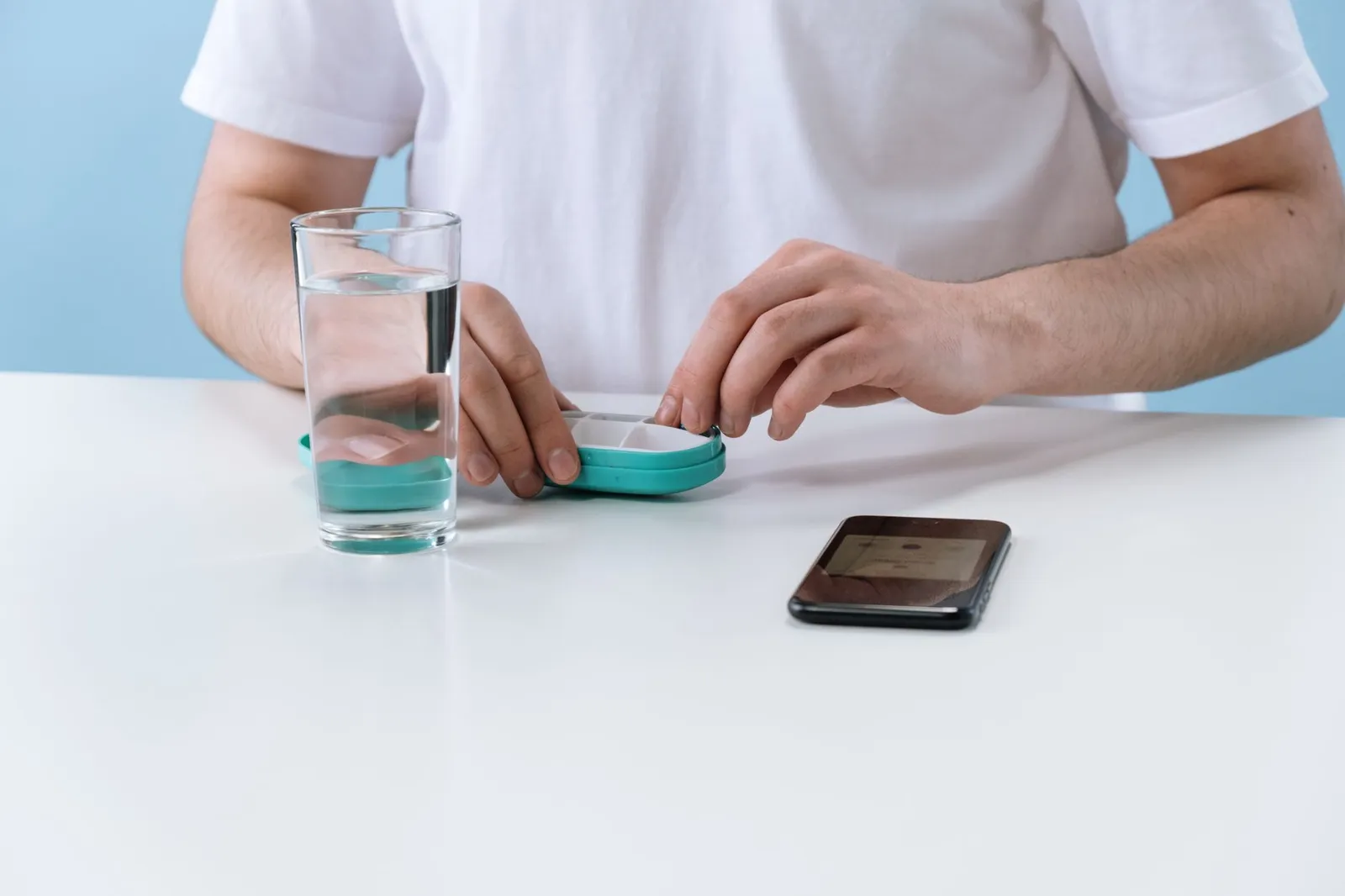
Creatine loading — 20 to 25 g a day for 5 to 7 days — typically adds 1 to 2 kg to the scale, and full protocols report gains of 1 to 3 kg, almost all of it water drawn into muscle cells rather than fat. As of August 2026, the best-measured trial recorded 2.04 L of extra total body water and 1.31 kg of extra body mass over 28 days [1][3]. A 3 to 5 g daily dose builds a similar gain gradually over three to four weeks, and the water stays only while supplementation continues [2].
Creatine monohydrate is the most studied sports supplement in existence — the International Society of Sports Nutrition position stand describes intakes up to 30 g a day for five years as safe and well tolerated in healthy people [2]. The scale, however, has ruined the first week of supplementation for a lot of people. You start a deficit, add creatine because the strength evidence is strong, and four days later you are 1.5 kg heavier. It reads as fat gain. It is not — storing 1.5 kg of fat would take a surplus of roughly 11,600 kcal (48,300 kJ), and what actually moved is water.
This post puts numbers on the jump: how many kilograms each dosing protocol adds and on what timeline, what the fluid-measurement trials show about where the water sits, how long it lasts, and how to keep your weight trend readable while it happens. It is a companion to our guide on overnight scale jumps — glycogen, sodium, and gut contents — covering the single most common supplement cause.
How much weight does creatine make you gain?
Creatine loading at 20 to 25 g a day for 5 to 7 days typically adds 1 to 3 kg (2.2 to 6.6 lb) of body mass, most of it inside the first week. A 3 to 5 g daily dose produces a similar gain spread across three to four weeks [2][3].
The size and speed of the step depend mostly on how fast you saturate your muscles:
| Protocol | Dose | Time to saturation | Expected scale change |
|---|---|---|---|
| Loading phase | 20–25 g/day (4 × 5 g) for 5–7 days | About one week | +1 to 3 kg (2.2 to 6.6 lb), concentrated in week one [2][3] |
| Loading then maintenance | 25 g/day for 7 days, then 5 g/day | Week one, then held | +1.31 kg body mass and +2.04 L total body water at day 28 [1] |
| Low-dose start | 3–5 g/day from day one | Three to four weeks | Similar end point, built gradually — little visible jump week to week [2][6] |
| Short load in women | 20 g/day for 5 days | Partial | +0.83 L total body water; body-mass change too small to reach significance [4] |
Two useful implications follow. First, the gain scales with muscle: larger, more muscular people store more creatine and therefore more associated water, which is why reported ranges run 1 to 3 kg rather than a single number [3]. Second, skipping the load does not skip the water — it spreads the same step across a month, where normal daily fluctuation from glycogen, sodium, and gut contents largely hides it.
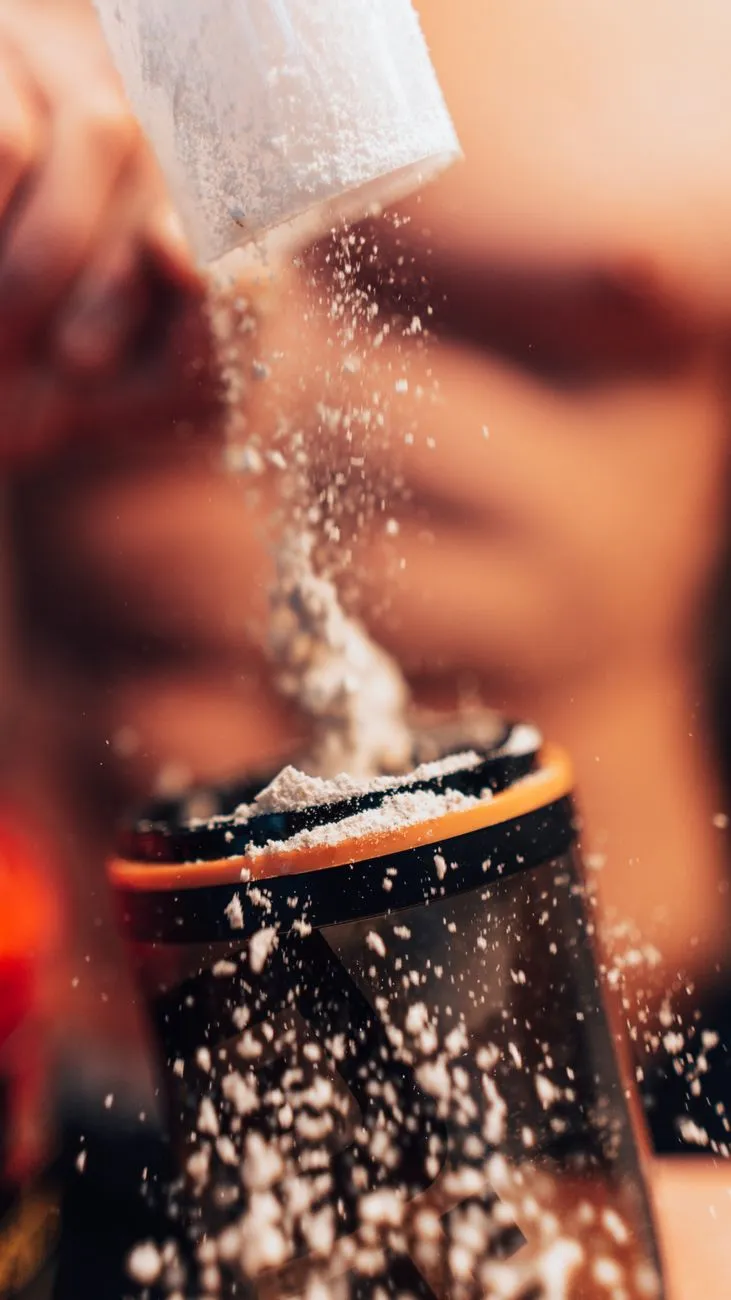
Is creatine weight gain water, muscle, or fat?
The early gain is water inside muscle cells. Creatine is osmotically active, so as muscle stores rise, water follows into the cell — and controlled trials consistently find no increase in fat mass at any dose or duration studied [1][3].
Creatine's role in the muscle cell is rapid energy regeneration, but it also raises the concentration of dissolved particles inside the cell, and water crosses the membrane to balance that gradient. The measurement studies agree on the destination. In the Powers trial, total body water rose without changing the intracellular-to-extracellular split — the body held its normal pattern of roughly two-thirds of water inside cells [1]. A 2023 randomised trial in 30 active women found five days of 20 g a day raised intracellular fluid by 0.74 L against placebo, with total body water up 0.83 L [4]. An eight-week trial cited in the 2021 misconceptions review measured total body water up 7.0 percent and intracellular water up 9.2 percent, while the ratio of skeletal muscle to intracellular water stayed constant — the water tracked the muscle tissue rather than diluting it [3].
Location matters for how the gain looks. Water inside muscle cells is not the puffy, under-the-skin retention of a salty night out: in the trial that tracked fluid distribution, the extracellular compartment — where visible bloating lives — showed no significant expansion [1]. Lifters tend to describe the effect as muscles looking fuller, not softer.
On the fat question the literature is unambiguous. The 2021 review examined randomised controlled trials running from one week to two years and found creatine supplementation does not increase fat mass — and a meta-analysis by Forbes and colleagues found creatine groups actually lost about 0.5 kg more fat than placebo groups [3][5]. The energy arithmetic rules fat out anyway: 1 kg of body fat stores roughly 7,700 kcal (32,200 kJ), a surplus almost nobody eats by accident in a few days — the same constant we use in the weight-trend TDEE method.
One practical caveat: bioelectrical impedance devices estimate body composition from how easily a current passes through body water, and adding intracellular water changes exactly what they measure. A smart scale body-fat reading may drift during the saturation window for reasons that have nothing to do with fat, so consider treating those numbers as unsettled until your weight plateaus again.
How long does creatine water weight last?
Creatine water weight arrives with saturation — inside a week when loading, across three to four weeks at 3 to 5 g a day — then holds as a stable step for as long as supplementation continues. It is a one-time shift, not a climb that keeps building [2][3].
The trials that ran past the loading window are consistent on this. Once muscle stores are full, a maintenance dose of 3 to 5 g a day keeps them there, and the associated water plateaus with them: supplementation studies at 32 days, six weeks, and five to ten weeks found no further rise in total body water beyond what tracked lean-mass changes [3]. The step pattern is also why "creatine ruined my cut" stories cluster in weeks one and two — after saturation, the scale returns to reflecting energy balance, just from a baseline roughly 1 to 2 kg higher.
| Phase | What is happening | What the scale shows |
|---|---|---|
| Days 1–7 (loading) | Muscle creatine and intracellular water rising fast | A step of 1 to 2 kg, sometimes 3 kg in larger lifters [2][3] |
| Weeks 1–4 (low-dose or maintenance) | Stores topping up to saturation | Slower drift upward, then flat [2] |
| Months on maintenance | Stores stable; water proportional to muscle | Normal energy-balance trend from the new baseline [3] |
| After stopping | Muscle stores decline as creatine turns over | The step reverses over the following weeks [6] |
How do you handle creatine weight on the scale and in your tracker?
Treat the start of creatine as a known, bounded scale event: expect a step of 1 to 2 kg over one to four weeks depending on dose, keep logging normally, and judge your calorie target by the weight trend after saturation rather than through it [1][2][3].
A five-step protocol keeps your data clean:
- Note the start date in your log. A step change with a recorded cause is easy to read later; an unexplained 1.5 kg is the kind of number that derails a diet week.
- Weigh under consistent conditions — same time of day, same state, ideally after waking. The creatine step will still be visible, but you strip away the daily noise that sits on top of it.
- Hold your calorie target steady. The jump is water, not a failed deficit, and cutting intake in response means reacting to a number that carries no fat-gain information.
- Restart your trend window at saturation. If you estimate maintenance from your own data — average intake against weight change, as in the food-log TDEE method — exclude the transition weeks, or the water step will masquerade as a large daily surplus and understate your real TDEE.
- Discount impedance body-fat readings for a few weeks. Extra intracellular water changes what the current sees; research suggests waiting for the weight plateau before reading anything into the body-fat line [4].
The overlap case worth calling out is starting creatine and a calorie deficit in the same week. A genuine 0.5 kg-per-week fat loss can be fully hidden by a 1.5 kg water step for close to three weeks — the fat is still leaving, the scale just cannot show it yet. If you expect the step, you can read straight through it; if you do not, it reads as three weeks of failure. Consider starting creatine either a couple of weeks before the deficit or once your trend line is established, purely so the two signals stay separable. And if you are lifting through a recomposition phase, the muscle you add carries its own water and its own — surprisingly small — resting calorie burn.
Frequently Asked Questions
Does creatine make you fat?
No. Randomised controlled trials from one week to two years show no increase in fat mass from creatine supplementation, and a meta-analysis found creatine groups lost about 0.5 kg more fat than placebo groups [3][5]. The weight it adds is water held inside muscle cells [1].
How much water weight do you gain on 5 g of creatine a day?
Roughly the same total as loading — commonly 1 to 2 kg — but spread across three to four weeks as stores saturate gradually [2][6]. Many people notice nothing week to week because normal daily fluctuation is larger than each day's share of the gain.
Does creatine water weight go away?
While you keep taking creatine, the water persists as a stable step — longer studies show no continued accumulation beyond saturation [3]. Once supplementation stops, muscle stores decline over the following weeks and the associated water leaves with them [6].
Does creatine cause bloating?
The measured water gain sits inside muscle cells, and the trial that tracked fluid distribution found no significant expansion of the extracellular compartment where visible bloating occurs [1]. High loading doses can upset the stomach in some people, which is one reason the 3 to 5 g daily route may be more comfortable [6].
Do women gain as much water weight as men?
A five-day 20 g load in 30 active women raised total body water by 0.83 L — measurable, but the accompanying body-mass change did not reach statistical significance [4]. Fluid shifts across the menstrual cycle sit in a similar size range, which can mask the creatine step entirely [4].
Is the creatine loading phase necessary?
No — it is a speed choice, not a requirement. Cleveland Clinic notes the same saturation arrives on 3 to 5 g a day, just over three to four weeks instead of one [2][6]. Loading brings the performance benefits sooner; the low-dose route makes the scale step gentler on both the stomach and the nerves.
Sources
- Powers ME, Arnold BL, Weltman AL, et al. Creatine Supplementation Increases Total Body Water Without Altering Fluid Distribution. Journal of Athletic Training, 2003. https://pmc.ncbi.nlm.nih.gov/articles/PMC155510/
- Kreider RB, Kalman DS, Antonio J, et al. International Society of Sports Nutrition position stand: safety and efficacy of creatine supplementation in exercise, sport, and medicine. Journal of the International Society of Sports Nutrition, 2017. https://pmc.ncbi.nlm.nih.gov/articles/PMC5469049/
- Antonio J, Candow DG, Forbes SC, et al. Common questions and misconceptions about creatine supplementation: what does the scientific evidence really show? Journal of the International Society of Sports Nutrition, 2021. https://pmc.ncbi.nlm.nih.gov/articles/PMC7871530/
- Moore SR, Gordon AN, Cabre HE, Hackney AC, Smith-Ryan AE. A Randomized Controlled Trial of Changes in Fluid Distribution across Menstrual Phases with Creatine Supplementation. Nutrients, 2023. https://pmc.ncbi.nlm.nih.gov/articles/PMC9865497/
- Kreider RB, Stout JR. Creatine in Health and Disease. Nutrients, 2021. https://pmc.ncbi.nlm.nih.gov/articles/PMC7910963/
- Cleveland Clinic. Is the Creatine Loading Phase Worth It? Cleveland Clinic Health Essentials. https://health.clevelandclinic.org/creatine-loading-phase
Ready to track smarter?
Join thousands who use kcalm for calorie tracking. AI-powered food recognition, scientifically-validated calculations, and zero anxiety.