Added Sugar: How Much Is Too Much and How to Cut Back
How much added sugar is too much? Learn the daily limits, where it hides, what it does to your body, how to read it on labels, and 7 ways to cut back.
kcalm editorial team
Prepared with AI assistance

The American Heart Association recommends a daily limit of 25 grams (6 teaspoons) of added sugar for women and 36 grams (9 teaspoons) for men. Yet the average US adult eats about 71 grams a day, roughly 13% of total calories, according to CDC NHANES data. Cutting back lowers your risk of weight gain, type 2 diabetes, and heart disease.
Added sugar is the single most over-consumed ingredient in the modern diet, and most of it is invisible. It hides in foods that do not taste sweet, from pasta sauce to whole-grain bread, which is why people routinely eat double the recommended limit without realizing it.
This guide explains what added sugar actually is, how it differs from the natural sugar in fruit and milk, how much is genuinely too much, what it does to your body, and practical ways to cut back without feeling deprived.
What Is Added Sugar, and How Is It Different From Natural Sugar?
Added sugar is any sugar or syrup put into food during processing or preparation, as opposed to the sugar that occurs naturally in whole foods. Table sugar, high-fructose corn syrup, honey, and fruit juice concentrate are all added sugars. The sugar in a whole apple or a glass of milk is not.
The distinction matters because of context. Natural sugar in whole fruit arrives packaged with fiber, water, and nutrients that slow its absorption and blunt blood sugar spikes. Added sugar arrives stripped of all that, delivering quick calories with little else. It is one part of the broader carbohydrate family covered in our ultimate guide to macronutrients, and it is why the 2020-2025 Dietary Guidelines for Americans set limits on added sugar specifically, not total sugar. The World Health Organization uses a related term, "free sugars," which adds the sugar in honey, syrups, and fruit juice to the total.
How Much Added Sugar Is Too Much?
Most health authorities converge on a simple ceiling: keep added sugar under 10% of your daily calories, and lower is better. On a 2,000-calorie diet, 10% is about 50 grams, or 12 teaspoons. The American Heart Association sets stricter, sex-specific targets that many dietitians prefer.
| Authority | Recommended daily limit |
|---|---|
| American Heart Association, women | 25 g (6 tsp) / ~100 cal |
| American Heart Association, men | 36 g (9 tsp) / ~150 cal |
| American Heart Association, children 2-18 | Under 25 g (6 tsp) |
| Dietary Guidelines for Americans | Under 10% of calories (~50 g) |
| World Health Organization (strong) | Under 10% of energy |
| World Health Organization (ideal) | Under 5% of energy (~25 g) |
The World Health Organization goes furthest, recommending free sugars stay under 10% of energy, with a conditional target below 5%, about 25 grams a day, for added health benefits (WHO, 2015). For most people, the gap between these targets and the 71-gram average is the entire problem. There is no biological requirement for added sugar at all.
Where Does Most Added Sugar in Your Diet Come From?
Sugar-sweetened beverages are the single largest source of added sugar in the US diet, supplying about 24% of the total, according to the Dietary Guidelines. A 12-ounce can of regular soda contains around 39 grams of added sugar, nearly 10 teaspoons, which exceeds a full day's recommended limit for women in one drink.
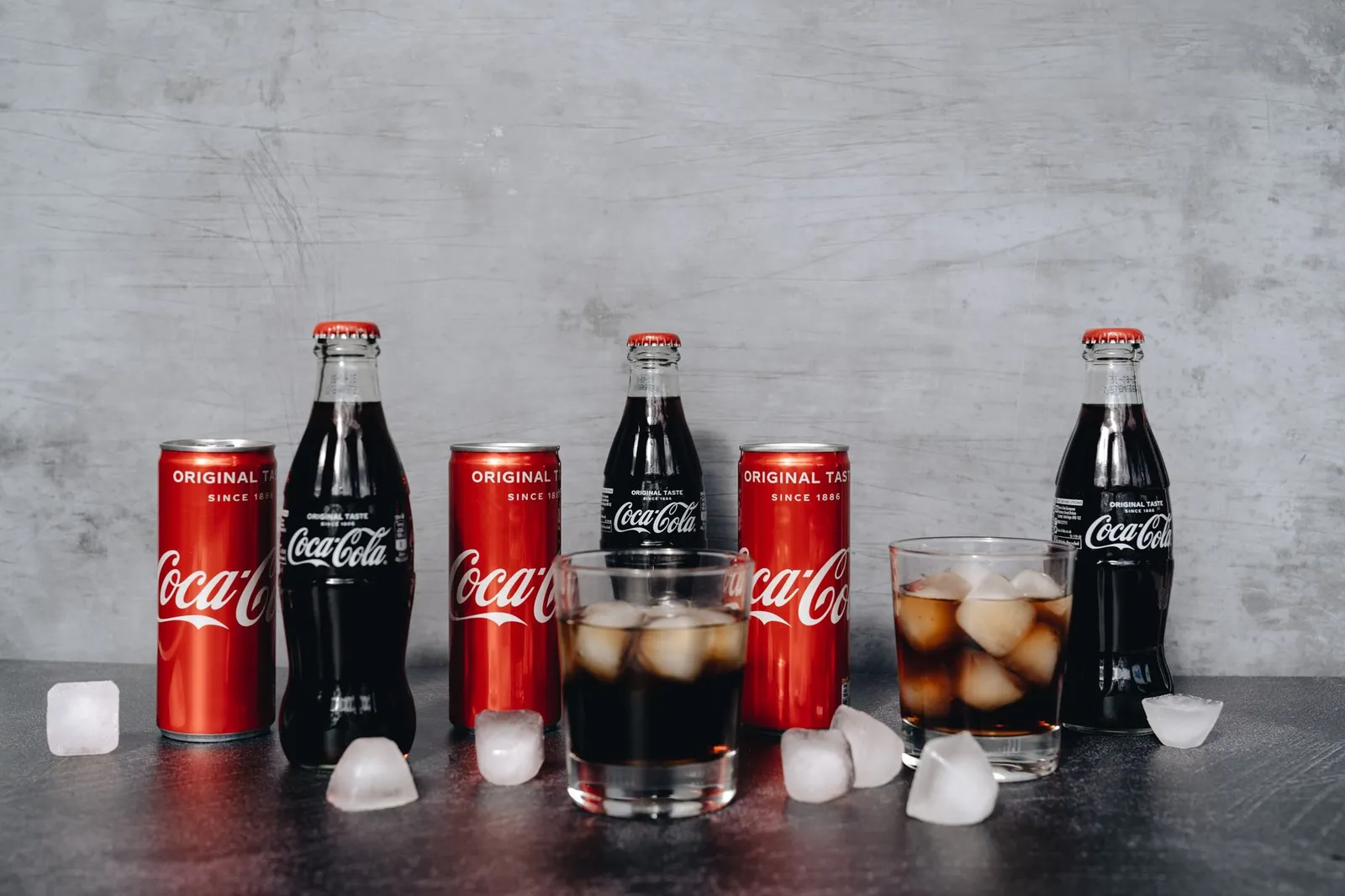
After drinks come desserts and sweet snacks, sweetened cereals, and a long tail of savory foods most people never suspect. The biggest culprits are largely ultra-processed foods, where sugar is added for flavor, texture, and shelf life. The table below shows how quickly added sugar accumulates across a typical day.
| Food (typical serving) | Added sugar | Teaspoons |
|---|---|---|
| Regular soda (12 oz) | ~39 g | ~10 |
| Sweetened smoothie or juice (16 oz) | ~30-45 g | ~8-11 |
| Flavored yogurt (6 oz) | ~12-18 g | ~3-4 |
| Sweetened breakfast cereal (1 cup) | ~12 g | ~3 |
| BBQ sauce (2 tbsp) | ~10-13 g | ~3 |
| Granola bar | ~8-12 g | ~2-3 |
| Pasta sauce (1/2 cup) | ~6-10 g | ~2 |
| Ketchup (1 tbsp) | ~4 g | ~1 |
What Does Added Sugar Do to Your Body?
Added sugar contributes calories with almost no nutritional value, and at high intakes it independently raises the risk of several chronic diseases. The effects fall into two buckets: what it does to your weight, and what it does to your long-term health beyond weight.
Does Added Sugar Cause Weight Gain?
Not through any special chemistry, but it makes overeating easy. Added sugar has 4 calories per gram and almost no protein, fiber, or volume, so it does little to satisfy hunger. A 2013 BMJ meta-analysis (Te Morenga et al.) found that reducing added sugar consistently lowered body weight, while increasing it raised weight, with sugary drinks showing the strongest effect. Liquid sugar in particular slips past the body's fullness signals, so a 250-calorie soda adds to your daily total instead of replacing food. For how appetite signaling works, see our guide to hunger hormones.
Does Added Sugar Raise Disease Risk?
Yes, partly independent of weight gain. A 2014 study in JAMA Internal Medicine (Yang et al.) found that adults who got 17 to 21% of their calories from added sugar had a 38% higher risk of dying from cardiovascular disease than those who stayed under 10%. A 2015 BMJ meta-analysis (Imamura et al.) linked each daily serving of a sugar-sweetened drink to an 18% higher risk of type 2 diabetes. Chronically high added sugar also promotes low-grade inflammation and fatty liver, which is one reason anti-inflammatory foods emphasize cutting it back.
How Do You Spot Added Sugar on a Food Label?
Start with the Nutrition Facts label. Since 2020, US labels must list "Includes Xg Added Sugars" directly under total sugars, with a percent Daily Value based on a 50-gram limit. If one serving hits 20% of that value, it is spending a fifth of your daily budget in a single product.
The ingredient list is the second clue. Added sugar appears under at least 60 different names, and manufacturers often split it across several so no single one tops the list. Common aliases include:
- High-fructose corn syrup
- Cane sugar, evaporated cane juice, or raw sugar
- Sucrose, dextrose, maltose, and other words ending in "-ose"
- Corn syrup, brown rice syrup, and malt syrup
- Agave nectar, honey, and maple syrup
- Fruit juice concentrate
- Molasses, caramel, and barley malt
A useful rule: if any of these appears in the first three ingredients, or several appear scattered through the list, the product is sugar-heavy no matter what the front of the package claims.
Is the Sugar in Fruit Bad for You?
No. Whole fruit is not a meaningful source of added sugar, and the natural sugar it contains comes bundled with fiber, water, and nutrients that slow absorption. A medium apple has about 19 grams of sugar but also 4 grams of fiber, which blunts the blood sugar response. Population studies consistently link whole-fruit intake to lower, not higher, risk of type 2 diabetes. The caveat is juice and smoothies: juicing or blending strips the fiber and concentrates the sugar, so a 16-ounce juice can rival a soda. The WHO classifies juice sugar as a free sugar for exactly this reason. For more on fiber's protective role, see our fiber guide.
How Can You Cut Back on Added Sugar Without Feeling Deprived?
The most effective approach is gradual and targeted, not an all-or-nothing ban that triggers cravings. Start with your largest single source, usually drinks, and work down. These seven strategies do most of the work:
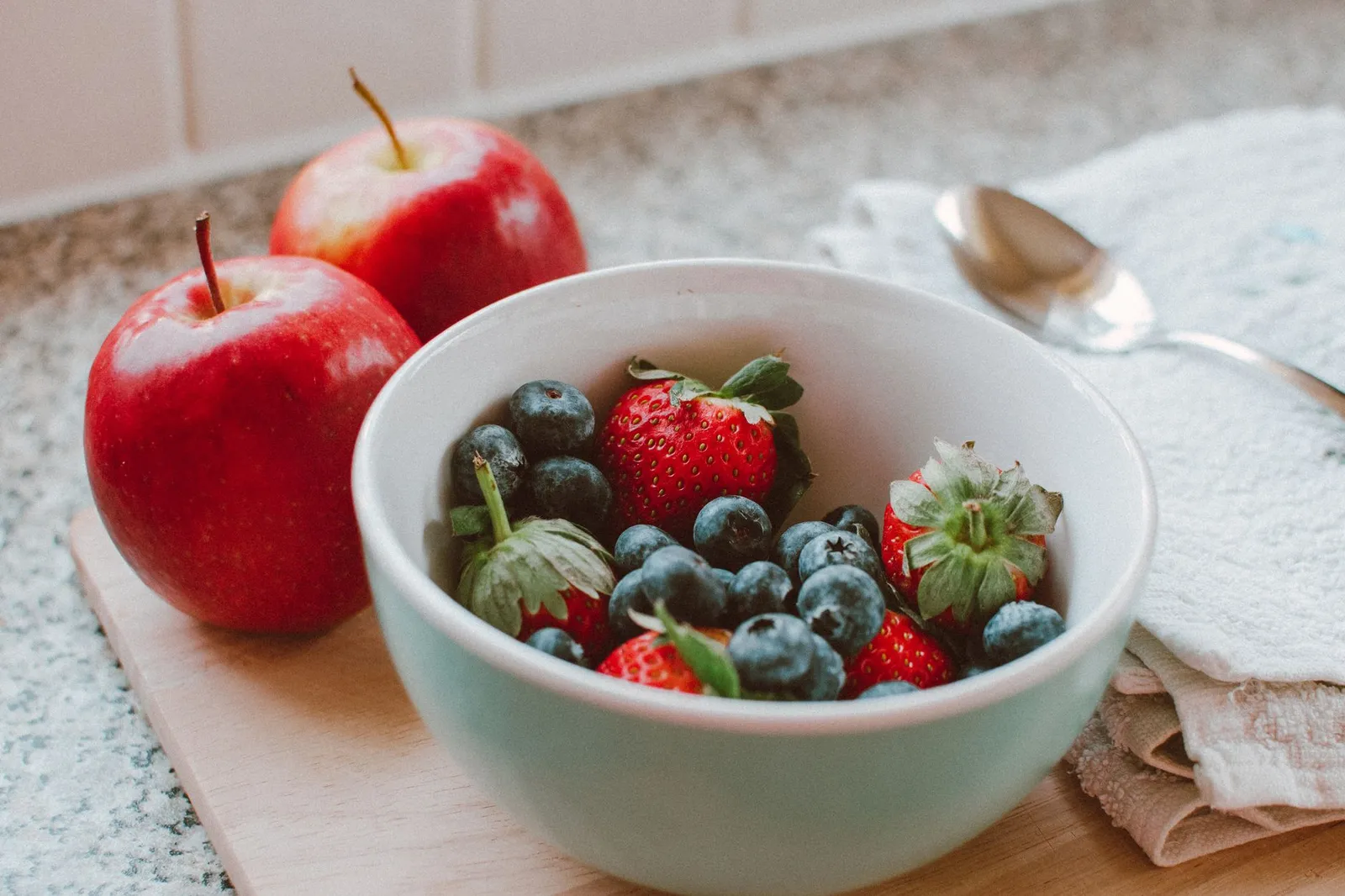
- Cut liquid sugar first. Swapping one daily soda or sweet coffee for water or an unsweetened version can remove 30 to 50 grams of added sugar instantly.
- Read the added-sugars line. Compare brands of yogurt, cereal, and sauce, and pick the lower option. Differences of 10-plus grams per serving are common.
- Watch savory foods. Pasta sauce, bread, salad dressing, and condiments are major hidden sources. Choose no-added-sugar versions where you can.
- Reduce gradually. Taste buds recalibrate in a few weeks, so slowly cutting the sugar in coffee or cereal makes the change stick.
- Build meals around protein and fiber. Both blunt blood sugar swings and the cravings that follow. This is where calorie and macro tracking helps most.
- Swap, don't just subtract. Reach for whole fruit, cinnamon, or vanilla to satisfy a sweet tooth without added sugar.
- Don't be fooled by "natural" sugar. Honey, agave, coconut sugar, and maple syrup still count as added sugar and affect the body the same way.
Tracking added sugar in an app like kcalm makes the invisible visible, which is usually all it takes to bring intake back under the recommended limit.
Frequently Asked Questions
How many grams of added sugar per day is healthy?
The American Heart Association recommends no more than 25 grams (6 teaspoons) for women and 36 grams (9 teaspoons) for men. The Dietary Guidelines for Americans set a broader ceiling of under 10% of daily calories, about 50 grams on a 2,000-calorie diet. Less is better, and there is no nutritional requirement for added sugar at all.
Is the natural sugar in fruit the same as added sugar?
No. The sugar in whole fruit comes with fiber, water, and nutrients that slow its absorption and reduce blood sugar spikes, so the body handles it very differently. Added sugar delivers the same calories with none of that buffering. Whole fruit is consistently linked to better health outcomes, while excess added sugar is linked to worse ones.
Does cutting added sugar help you lose weight?
It can, mainly by cutting calories. A 2013 BMJ meta-analysis found that reducing added sugar reliably lowered body weight, with sugary drinks driving the largest effect. Added sugar provides calories with almost no fullness, so removing it tends to lower total intake without leaving you hungry, especially when you replace it with protein and fiber.
What is the difference between added sugar and total sugar?
Total sugar on a label includes both natural sugars, like the lactose in milk or fructose in fruit, and added sugars. Added sugar counts only what was put in during processing. The "Includes Added Sugars" line on US Nutrition Facts labels separates the two, so you can see how much of a food's sweetness was added versus naturally present.
Are honey and agave healthier than table sugar?
Not meaningfully. Honey, agave, maple syrup, and coconut sugar all count as added sugar and raise blood sugar and calorie intake much like table sugar. Honey carries trace antioxidants, but the amounts are far too small to offset the sugar load. Treat all of these as added sugar and keep them within the same daily limit.
Why do I crave sugar so much?
Sugar cravings are driven by a mix of biology and habit. Sugar triggers dopamine release, and frequent intake conditions the brain to expect it. Blood sugar swings from high-sugar meals can also spark rebound hunger. Eating balanced meals with protein and fiber, plus adequate sleep, stabilizes the hormones that govern appetite and reduces cravings over time.
How much added sugar is in a can of soda?
A standard 12-ounce can of regular soda contains about 39 grams of added sugar, nearly 10 teaspoons. That single drink exceeds the American Heart Association's entire daily limit for women (25 grams) and most of the limit for men (36 grams). Sugar-sweetened beverages are the leading source of added sugar in the US diet.
Sources
- Johnson, R.K., Appel, L.J., Brands, M., et al. (2009). Dietary sugars intake and cardiovascular health: a scientific statement from the American Heart Association. Circulation, 120(11), 1011-1020.
- Vos, M.B., Kaar, J.L., Welsh, J.A., et al. (2017). Added sugars and cardiovascular disease risk in children: a scientific statement from the American Heart Association. Circulation, 135(19), e1017-e1034.
- World Health Organization. (2015). Guideline: Sugars Intake for Adults and Children. Geneva: WHO.
- U.S. Department of Agriculture & U.S. Department of Health and Human Services. (2020). Dietary Guidelines for Americans, 2020-2025 (9th ed.).
- Yang, Q., Zhang, Z., Gregg, E.W., et al. (2014). Added sugar intake and cardiovascular diseases mortality among US adults. JAMA Internal Medicine, 174(4), 516-524.
- Imamura, F., O'Connor, L., Ye, Z., et al. (2015). Consumption of sugar sweetened beverages, artificially sweetened beverages, and fruit juice and incidence of type 2 diabetes. The BMJ, 351, h3576.
- Te Morenga, L., Mallard, S., Mann, J. (2013). Dietary sugars and body weight: systematic review and meta-analyses of randomised controlled trials and cohort studies. The BMJ, 346, e7492.
- Centers for Disease Control and Prevention. (2022). Know Your Limit for Added Sugars. National Center for Chronic Disease Prevention and Health Promotion.
Ready to track smarter?
Join thousands who use kcalm for calorie tracking. AI-powered food recognition, scientifically-validated calculations, and zero anxiety.
Related Articles
Do Fibre Calories Count? The 2 kcal/g Food Label Maths
Learn how fibre calories count on food labels, why energy factors differ across countries and how to log high-fibre foods without subtracting calories twice.
NutritionAU Christmas Lunch Calories: Ham, Prawns, Pavlova 2026
What a traditional Australian Christmas lunch costs in kilojoules — leg ham, cooked prawns, roast turkey, pavlova, and a glass of wine at 4,500 to 6,000 kJ per serve. Primary-source AU data from FSANZ AFCD, what 2023 holiday-weight research found across 4,627 participants, and a seven-step tracking playbook for the day inside the 8,700 kJ reference.
NutritionWhy Calorie Apps Overcount Vegetables (And How to Fix It)
Why calorie apps drift on vegetables — peer-reviewed research on database errors and oil absorption, the 7-step logging playbook for accurate AU vegetable tracking, and why the AFCD beats USDA for Australian produce.